
Product Insights
Window Tinting Benefits: What Tint Actually Does
Six real benefits, what tint does not do, and how Ontario rules actually work. Written from what we install every week at our Markham studio.
At a Glance
Biggest real benefit? Heat rejection and glare control, not darkness.
Darker means cooler? No. Film technology drives heat rejection, not shade.
Ontario rules? Front glass is tightly restricted, rear glass is not.
Worth upgrading to ceramic? For heat and signal performance, yes.
What this window tinting benefits guide covers
The Six Window Tinting Benefits
Tint gets bought for looks and kept for comfort. These are the benefits that actually show up in daily driving, roughly in the order our clients tell us they notice them.
1. Solar heat rejection
The one people feel immediately. Quality film blocks a substantial share of the infrared energy in sunlight, which is what actually heats a cabin. A car that used to be unbearable after an afternoon in a parking lot becomes merely warm. Air conditioning reaches a comfortable temperature faster and works less hard to hold it.
2. Glare control
Low winter sun in this part of the world sits directly in your eyes for much of the morning and afternoon commute. Film cuts that, along with headlight glare at night. Less squinting means less fatigue on a long drive, and it is the benefit most people underestimate before they have it.
People often think glare only matters during the day. In reality, many customers notice the biggest difference driving home after dark, when modern LED headlights are significantly harsher than the older halogen lights most of us learned to drive with.
3. UV protection
Quality film rejects the overwhelming majority of ultraviolet radiation. That matters for your interior, since UV is what fades upholstery, cracks dashboards, and degrades trim over years. It also matters for you, particularly on the arm and side of the face nearest the glass on a daily commute. For broader context, see the Health Canada sun safety guidance.
Families often choose ceramic film for exactly this reason. Children spend years sitting directly beside side glass that lets in substantial UV and heat, and rear seats rarely get the airflow the front does. Tint makes long summer drives noticeably more comfortable for rear-seat passengers.
4. Interior preservation
Heat and UV together are what age an interior. Leather dries and cracks, plastics become brittle, and colours shift. On a vehicle you plan to keep or resell, a cabin that still looks new is worth real money, and it is the kind of wear that is effectively impossible to reverse once it has happened.
5. Privacy
Tinted rear glass makes it harder to see what is inside a parked vehicle, which is a straightforward deterrent for opportunistic theft. It also simply feels better in traffic and in car parks. This is the benefit where Ontario rules matter most, because rear glass is where you have real freedom to go dark.
6. Appearance
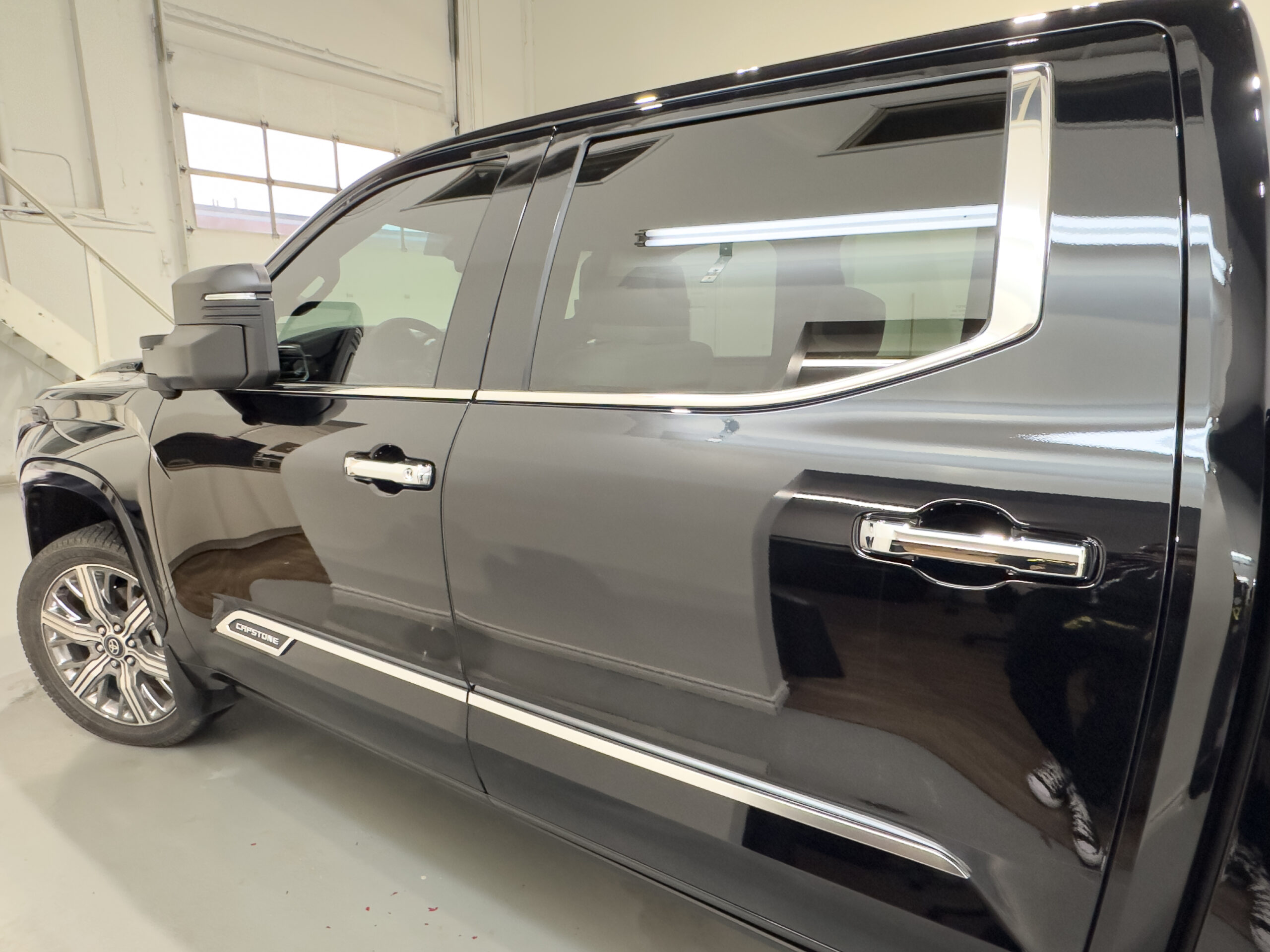
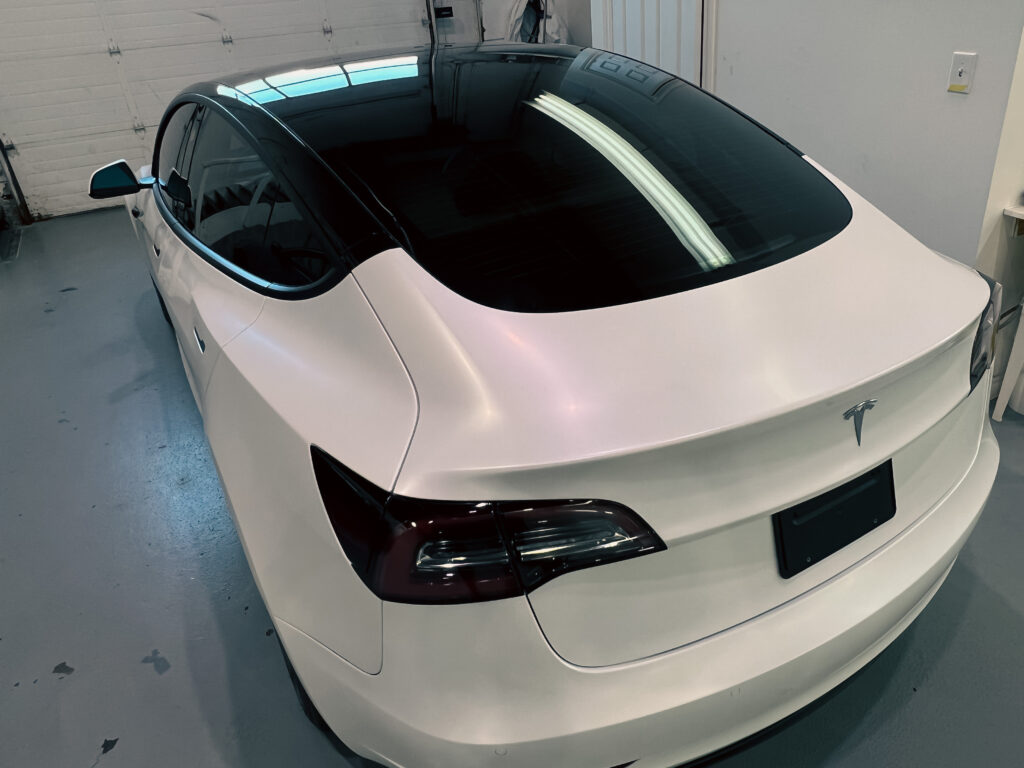
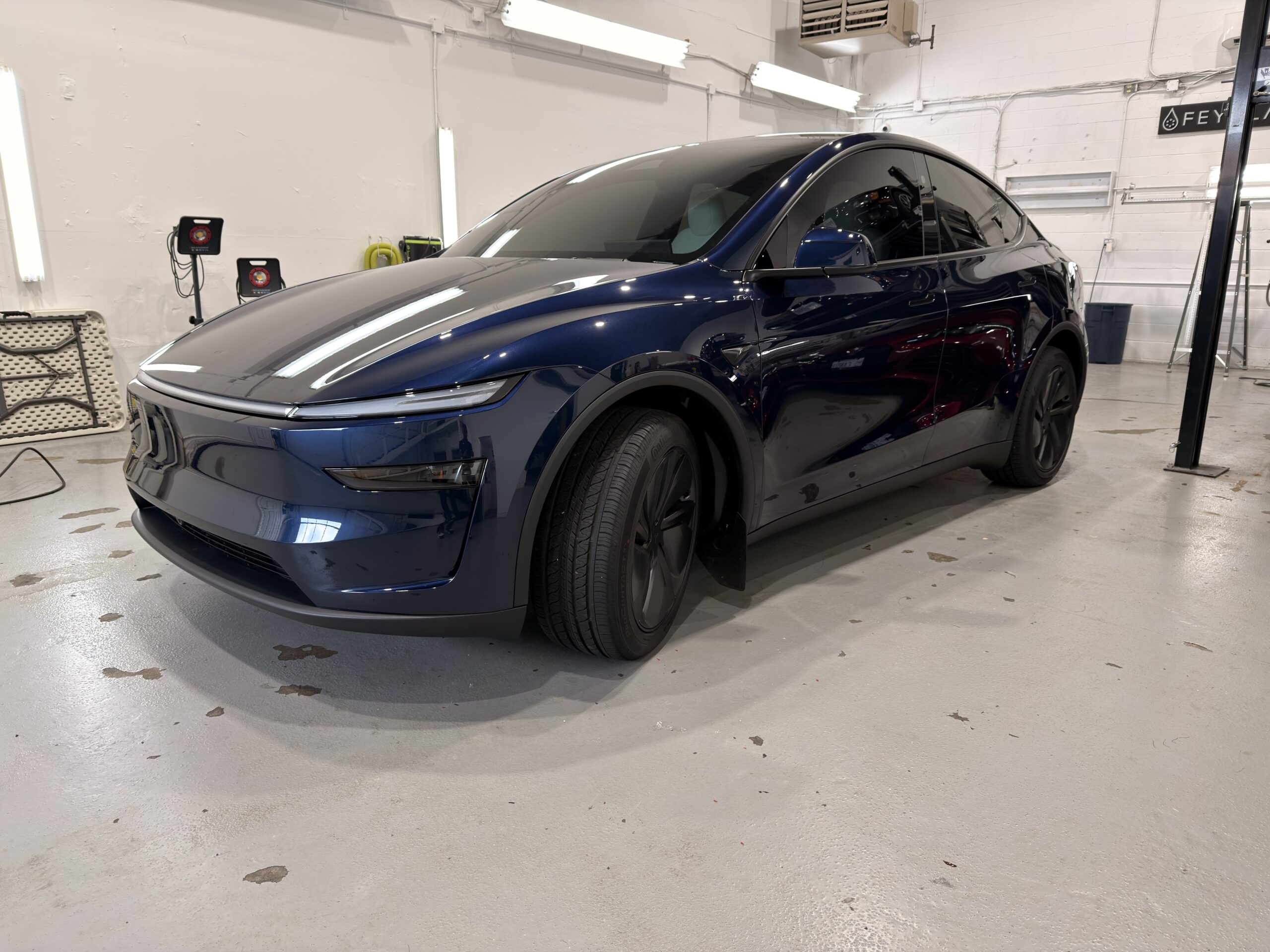
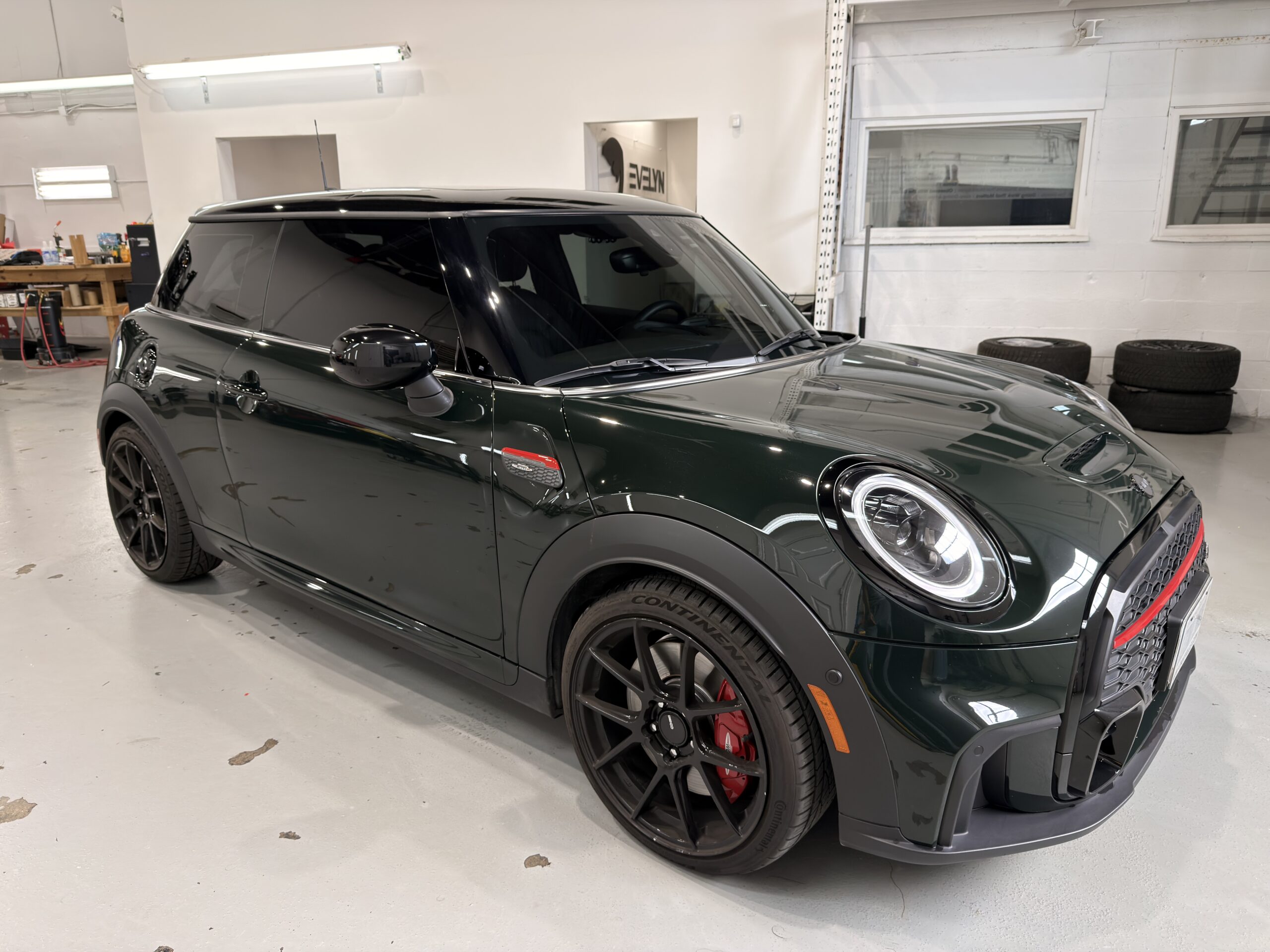
A properly tinted vehicle looks finished. Clean edges, consistent shade across matched glass, and no light gaps at the top of the door glass. It is worth saying plainly that appearance is a legitimate reason to buy tint, and it is what brings most people through the door. The rest of the benefits are what make them glad afterwards.
Tint we have installed
Clean edges, consistent shade across matched glass, no light gap at the top of the door windows.
Why Darker Does Not Mean Cooler
This is the most common misunderstanding in window tint, and it costs people money in both directions.
Darkness is measured as VLT, or visible light transmission. It describes how much visible light passes through, and it says almost nothing about heat. Heat rejection comes from how the film handles infrared energy, which is invisible. A cheap dark film can reject less heat than a quality film that is barely tinted at all.
That is why a nearly clear ceramic film on a windscreen or front glass can make a real difference to cabin temperature, while a very dark dyed film mostly just makes the car dark. If heat is your priority, ask about infrared rejection rather than choosing a shade number.
What Tint Does Not Do
Being clear about limits is part of specifying this properly.
Window film will not:
- Make glass shatterproof. Film can help hold broken glass together, which is a genuine safety benefit, but it is not security film and it does not stop a determined break-in.
- Eliminate heat entirely. It substantially reduces solar gain. A black car parked in full August sun will still be hot inside.
- Fix a scratched or pitted window. Film goes over healthy glass and follows its surface. Damage underneath stays visible.
- Protect paint. Different product, different job. That is what paint protection film does.
- Make illegal tint legal. No film technology changes what is permitted on front glass.
How Ontario Tint Rules Work
This is the question we get asked more than any other, and most articles answer it badly by quoting a percentage as though it were written into law. It is not that simple, and understanding why will save you trouble.
The standard is about obstruction, not a percentage
Ontario's Highway Traffic Act addresses window coatings in terms of whether they obstruct the driver's view or substantially obscure the interior of the vehicle when viewed from outside. It is written as a judgement about obstruction rather than as a numeric chart of permitted darkness for each window, which is how many United States jurisdictions handle it.
The practical consequence is that enforcement involves an officer's assessment. Shops and drivers have converged on conventional figures over the years, but a number you read online is industry convention rather than a statutory limit you can point to at the roadside.
Front glass is where the restrictions bite
The windscreen and the side windows immediately beside the driver are treated far more strictly than anything behind them. Aftermarket film that darkens front glass is where drivers get into difficulty, and it is the area where we will tell you no rather than take the work.
This is exactly where a virtually clear film matters. A film that does not visibly darken the glass is a fundamentally different proposition from one that does, and it is how you get heat and UV performance on front glass without a darkness problem.
Rear glass is where you have freedom
Rear side windows and the rear windscreen are treated very differently and give you genuine latitude, which is why most builds run darker at the back and light at the front. That combination is not a compromise. It is the correct answer for most vehicles.
Please confirm before you book. Regulations change and enforcement practice varies. We are installers rather than legal advisers, so treat this as general background, check the current Highway Traffic Act provisions or speak with your insurer, and talk to us about your specific vehicle. We would far rather have that conversation before installation than after a ticket.
Choosing the Right Film
Film is not one product. What you want depends on which glass you are treating and what you are trying to solve, so we group what we install into packages rather than asking you to compare specification sheets.
Premium Ceramic
Our flagship ceramic film delivers our highest heat rejection, exceptional optical clarity, and outstanding long-term durability. It is the package we recommend for drivers who spend significant time behind the wheel, or who simply want the best overall comfort we offer.
Ceramic
Our everyday ceramic film offers excellent heat rejection, UV protection, and glare reduction while providing exceptional value for daily drivers. For most vehicles this is the sensible middle ground.
Clear Windshield Film
Our virtually clear ceramic windshield film is designed for drivers who want heat rejection and UV protection without noticeably changing the appearance of the glass.
Complete Vehicle Solution
Most of our customers combine a ceramic side and rear package with a virtually clear windshield film, which maximises comfort throughout the cabin while keeping front glass light.
All of the ceramic films we install are selected for their ability to reject heat without interfering with GPS, mobile signal, keyless entry, or modern vehicle electronics. They are also designed to maintain long-term colour stability rather than fading over time.
Our current film lineup, including specific products, shade options, warranty terms, and vehicle-specific recommendations, is listed on our automotive window tint page. We also install architectural film for homes and commercial spaces.
What a Good Installation Looks Like
Film quality sets the ceiling. Installation decides whether you reach it.
Look at the edges. Film should reach the full extent of the glass with no light gap at the top of door windows when they are rolled up, and no ragged edge along the bottom. Look for contamination, meaning specks trapped under the film, which is a function of how clean the environment and the glass preparation were. Look at the rear windscreen, which is the hardest piece on any vehicle because it is curved in two directions and has to be heat-shrunk to fit. That panel tells you most about a shop.
Ask whether the shop stands behind both the product and the installation. A good manufacturer warranty matters, but so does knowing the installer will be there if you ever need them.
The First Week After Installation
Fresh film needs time to cure while the mounting solution fully evaporates from between the film and the glass.
For the first few days:
- Do not roll the windows down. Wait at least three days in warm weather and up to five in cooler conditions. This is the one that matters most, because rolling down uncured film can peel the edge.
- Expect some haziness or small water pockets. This is normal and clears as the film cures. It is not a fault.
- Do not clean the inside of the glass. Give it a week before wiping the filmed surface at all.
- Park in the sun where you can. Warmth speeds curing.
After curing, clean with an ammonia-free glass cleaner and a clean microfiber cloth. Ammonia degrades film adhesive over time, and it is present in many common household glass cleaners, so check the label.
Common Questions
How long does window tint installation take?
Most installations take one to three hours depending on the vehicle, how many windows are being done, and whether existing film has to be removed first. Removal of old film adds meaningful time, particularly if it has begun to break down.
Is ceramic tint worth the upgrade?
For heat rejection, yes, and noticeably so. Ceramic also holds colour rather than turning purple the way old dyed films did. If you are keeping the vehicle more than a couple of years, it is the better value.
Why is my factory privacy glass still hot?
Because privacy glass and heat-rejecting film are two different things. Factory privacy glass is tinted during manufacture by adding pigment to the glass itself, which makes it darker and harder to see through. It does very little about infrared energy, which is what actually heats the cabin. That is why a vehicle with dark factory rear glass can still cook on a summer afternoon. Adding a quality ceramic film over privacy glass addresses the heat that the glass alone never did, and it is one of the more dramatic before and after differences we see.
Does ceramic tint interfere with GPS, Bluetooth, or cell signal?
The ceramic films we install are designed to deliver heat rejection without interfering with GPS, Bluetooth, mobile signal, or modern vehicle electronics. Older metallic films earned that reputation, since they relied on a conductive layer that could disrupt radio signals, keyless entry, tyre pressure sensors, and toll transponders. Today's premium ceramic technologies avoid that problem. If a shop cannot tell you which type they are installing, that is worth knowing before you book.
Will tint make my car much cooler?
It makes a real difference to how quickly a cabin heats up and how hot it gets, particularly with ceramic film that rejects infrared. It does not make a parked car cool in August. Manage expectations around a meaningful improvement rather than air conditioning.
Does tint turn purple?
Quality modern film does not. Purple fading was a characteristic of older dyed films where the dye broke down under UV. Ceramic films hold their colour, which is one reason the lifetime warranties on them are meaningful.
Can existing tint be removed?
Yes, and we do it regularly before installing new film. Older film that has begun to break down takes longer to remove and requires care around rear defroster lines, which are easy to damage if the film is pulled carelessly.
Can you tint a sunroof?
Yes. Sunroofs are a common request for heat and glare, and they sit outside the restrictions that apply to front glass. It is one of the more noticeable improvements on a vehicle with a large panoramic roof.
What cleaner is safe on tinted windows?
An ammonia-free glass cleaner with a clean microfiber cloth. Avoid ammonia-based cleaners, abrasive products, and rough paper towels. Ammonia is the important one, since it degrades the adhesive over time.
Not sure which film or shade suits your vehicle?
Tell us the vehicle, how you drive it, and whether heat, glare, or privacy is your priority. We will recommend a combination that performs where you need it and keeps your front glass appropriate.


