Evelyn Insights / The paint inspection issue
Paint correction.
Before you protect.
PPF or ceramic coating: what does your car actually need?
Paint protection film and ceramic coating are installed over the paint that is already on your vehicle. They can protect and enhance that surface, but neither product erases defects underneath it.
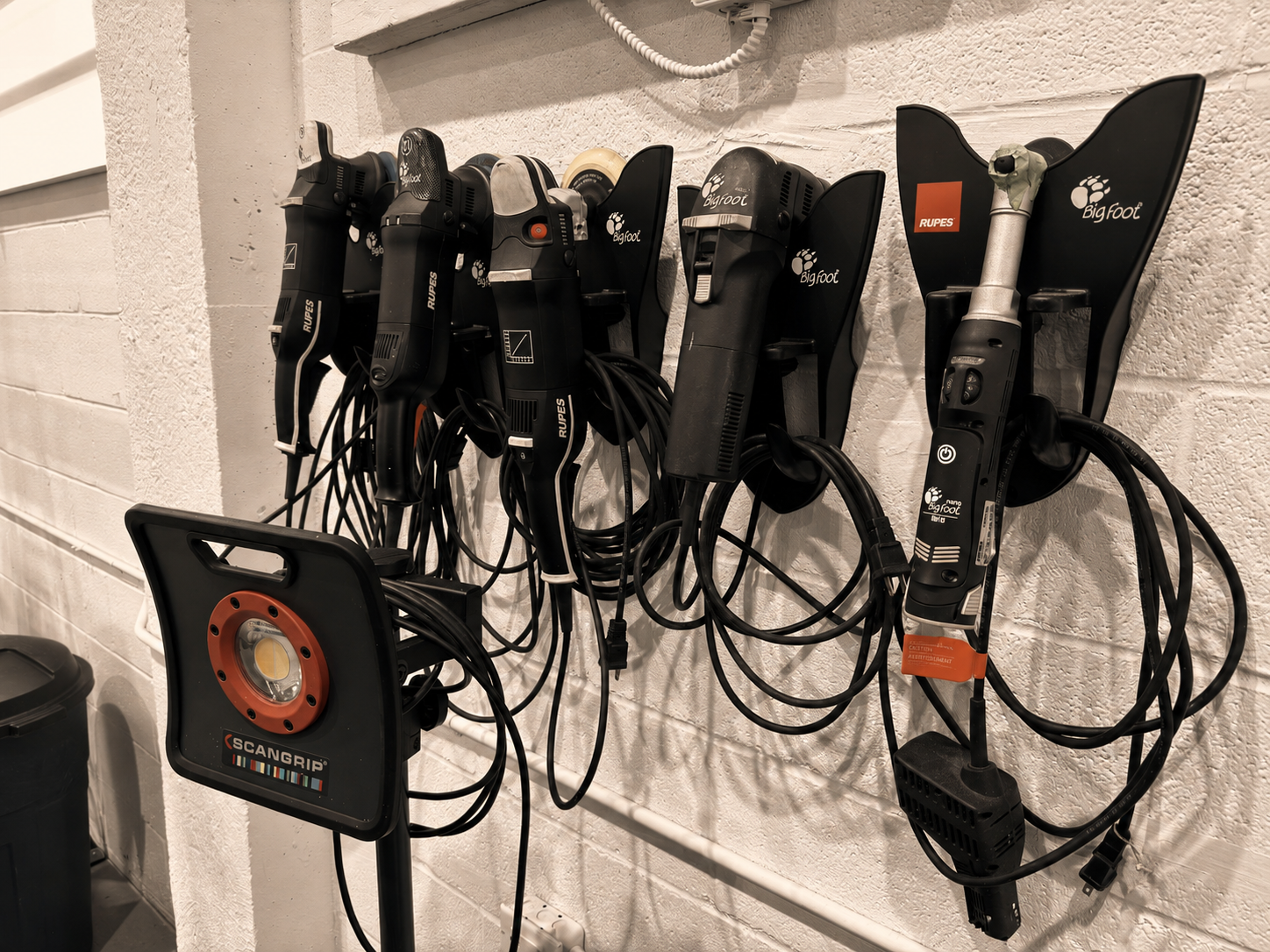
That is why preparation matters. The right amount of paint correction depends on the condition of the vehicle, the finish you expect, and the protection being installed. A new car may need only light enhancement. A used vehicle with years of wash damage may need more work, or a realistic conversation about which defects should be left alone.
Inspect. Refine. Protect.
Better paint.
Not polishing at any cost.
Before PPF
Prioritize a clean, stable surface and defects that would remain distracting beneath the film.
Before ceramic
Refine swirls and haze where safe, because a coating does not permanently fill scratches.
The short answer
Paint correction is not automatically required before every PPF or ceramic coating installation.
It is useful when visible swirls, haze, oxidation, water spotting, or light scratches would compromise the result. The goal is not to chase perfection at any cost. It is to improve the surface safely before protecting it.
What paint correction actually does
Paint correction uses machine polishing, appropriate pads, and polishing compounds to level or refine a small portion of the clear coat. This can reduce the appearance of:
- Swirl marks from improper washing
- Light scratches in the clear coat
- Haze and dullness
- Some water spotting and oxidation
- Previous polishing marks
It cannot safely repair every defect. Scratches that have penetrated the clear coat, stone chips, cracking paint, failing clear coat, and poor body repairs may require touch-up or refinishing instead.
Does a new vehicle need correction?
Sometimes. New does not always mean defect-free.
A vehicle may arrive with light wash marks, adhesive residue, transportation contamination, dealership polishing marks, or isolated scratches. Other new vehicles need a little more than washing, decontamination, inspection, and a light enhancement polish.
We assess the actual paint instead of assigning the same correction package to every new car. Explore our detailing and paint correction services in Markham for available service options.
Before paint protection film
Paint protection film adds a physical layer designed to defend painted surfaces from stone chips, road debris, and everyday wear. Because the film is transparent, the paint beneath it still influences the final appearance.
Light defects may become less noticeable under gloss film, but PPF should not be treated as a way to hide damaged paint. Contamination, raised touch-up paint, deep scratches, or unstable finishes can affect both appearance and adhesion.
The preparation plan normally focuses on cleanliness, adhesion, and correcting the defects that would remain distracting after installation.
Before ceramic coating
A ceramic coating adds gloss, hydrophobic behaviour, chemical resistance, and easier maintenance. It does not provide meaningful stone-chip protection and it does not fill scratches permanently.
Because a coating increases clarity and gloss, existing swirls and haze can remain visible beneath the finished surface. Paint correction is therefore often more noticeable before an automotive ceramic coating, especially on dark colours.
The correct level still depends on paint thickness, condition, ownership plans, and expectations.
One-step enhancement versus multi-stage correction
When we may recommend less correction
More polishing is not always the responsible choice. We may recommend a lighter approach when:
- The clear coat is thin or compromised
- The vehicle has previous bodywork
- Defects are too deep to remove safely
- The vehicle is a daily driver where preservation matters more than perfection
- The expected improvement does not justify the added cost
Honest inspection matters more than promising a percentage of defect removal before seeing the paint.
PPF, ceramic coating, or both?
PPF and ceramic coating solve different problems. PPF is the starting point when impact protection matters most. Ceramic coating is chosen for gloss, contamination resistance, and easier washing. Many owners use both: PPF on high-impact panels, then a suitable coating across the protected and unprotected surfaces.
Our PPF vs ceramic coating comparison explains the differences in more detail.
What happens during an inspection
We review the paint under proper lighting, identify defects and previous repairs, and discuss how you use the vehicle. From there, we can separate required preparation from optional cosmetic improvement.
The recommendation should answer three questions:
- What must be corrected for the protection to install properly?
- What can be improved safely?
- What level of finish makes sense for this vehicle and owner?
Thinking about protecting your vehicle?
Bring us the vehicle, or clear photos if you are planning ahead, and tell us what bothers you about the paint. We will explain what preparation is worthwhile before recommending correction, PPF, ceramic coating, or a combination.