
Comparison Guide
Vinyl Wrap vs Paint Protection Film: What Actually Differs
One changes how your car looks. The other stops your paint getting destroyed. Knowing which you actually want makes this an easy decision.
At a Glance
Want a different colour? Vinyl wrap.
Want to stop rock chips? Paint protection film.
Want both at once? Coloured PPF, or film on the front with wrap elsewhere.
Paint already damaged? Fix that first. Neither product is a cover-up.
What this comparison covers
- The short answer
- What each one actually is
- Vinyl wrap vs paint protection film, side by side
- The myth worth clearing up
- Coloured PPF: the option most people miss
- Combining the two
- What Ontario conditions do to each
- What each one means for resale
- Why paint condition decides both
- What we actually install
- Common questions
The Short Answer
These two products get compared constantly because they look similar going on: a large sheet of film, stretched and heated over your panels by someone who knows what they are doing. That is where the similarity ends.
Vinyl wrap is a cosmetic product. Paint protection film is a protective one. A wrap changes your colour and shields the paint underneath from light wear while it is on. Film is engineered to absorb impact so stones do not reach your paint at all.
If you find yourself weighing vinyl wrap vs paint protection film, the useful question is not which is better. It is: do I want my car to look different, or do I want my paint to survive Southern Ontario highways?
What Each One Actually Is
Vinyl wrap
Vinyl wrap is a pigmented PVC film, typically 3 to 4 mil, applied over your existing paint to change its colour or finish. Gloss, satin, matte, chrome, brushed metal, carbon fibre texture, colour shift. The range is enormous, and it is the whole point. It is removable, which means you can transform a car and return it to factory colour later. That reversibility is why leased and resale-conscious owners like it. Wrap also protects the original colour from everyday wear while installed, which can help preserve the appearance of the factory finish beneath it.
Paint protection film
PPF is a clear thermoplastic urethane film that acts as a physical barrier over your paint, typically around 8 mil, roughly twice the thickness of wrap. It is engineered to absorb the energy of stones and debris, and premium film is self-healing: the topcoat reflows and closes light scratches with heat from the sun. It is normally invisible, though it also comes in matte and coloured finishes.
Same install bay, same skill set, completely different jobs.
Vinyl Wrap vs Paint Protection Film, Side by Side
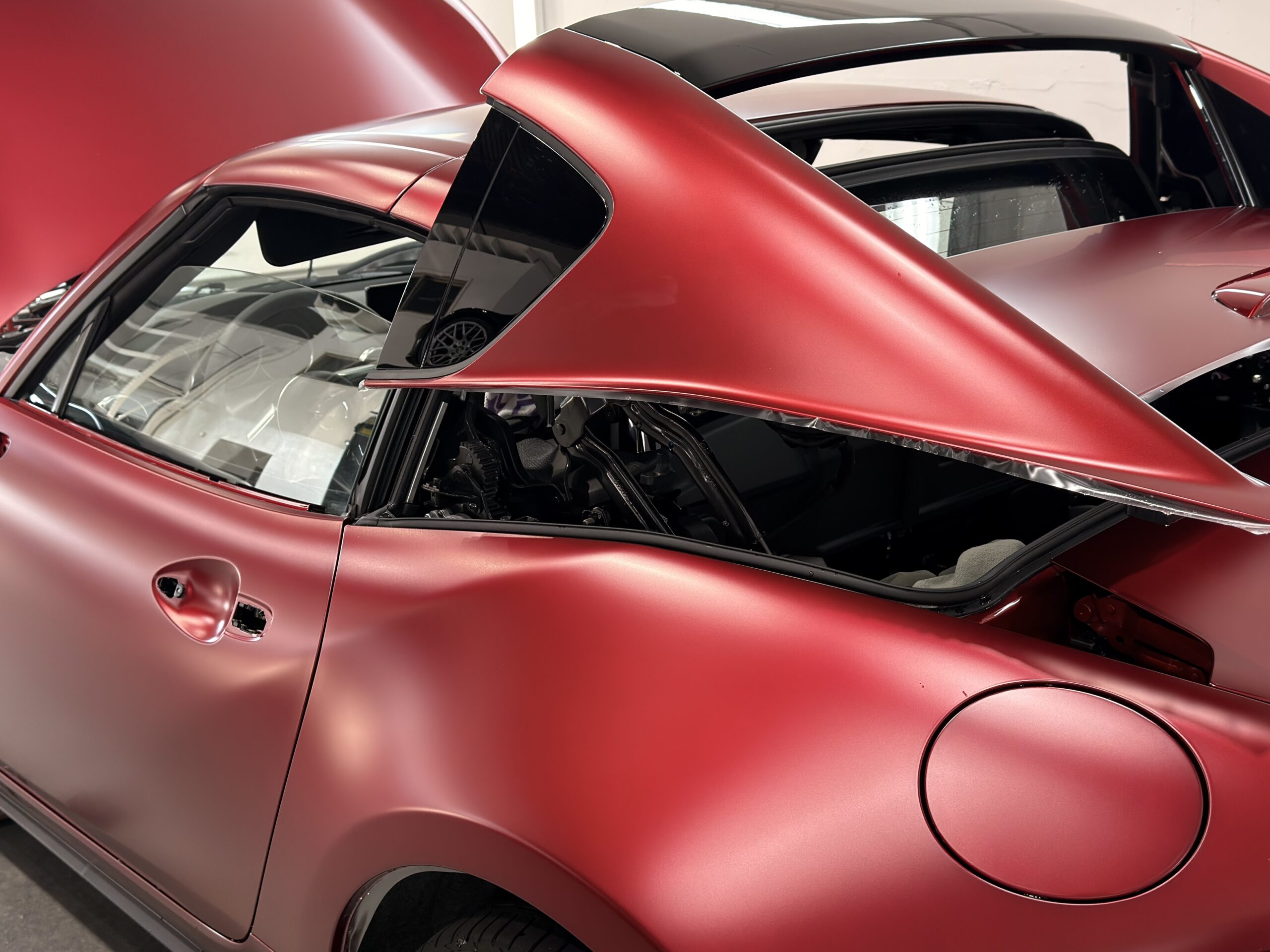
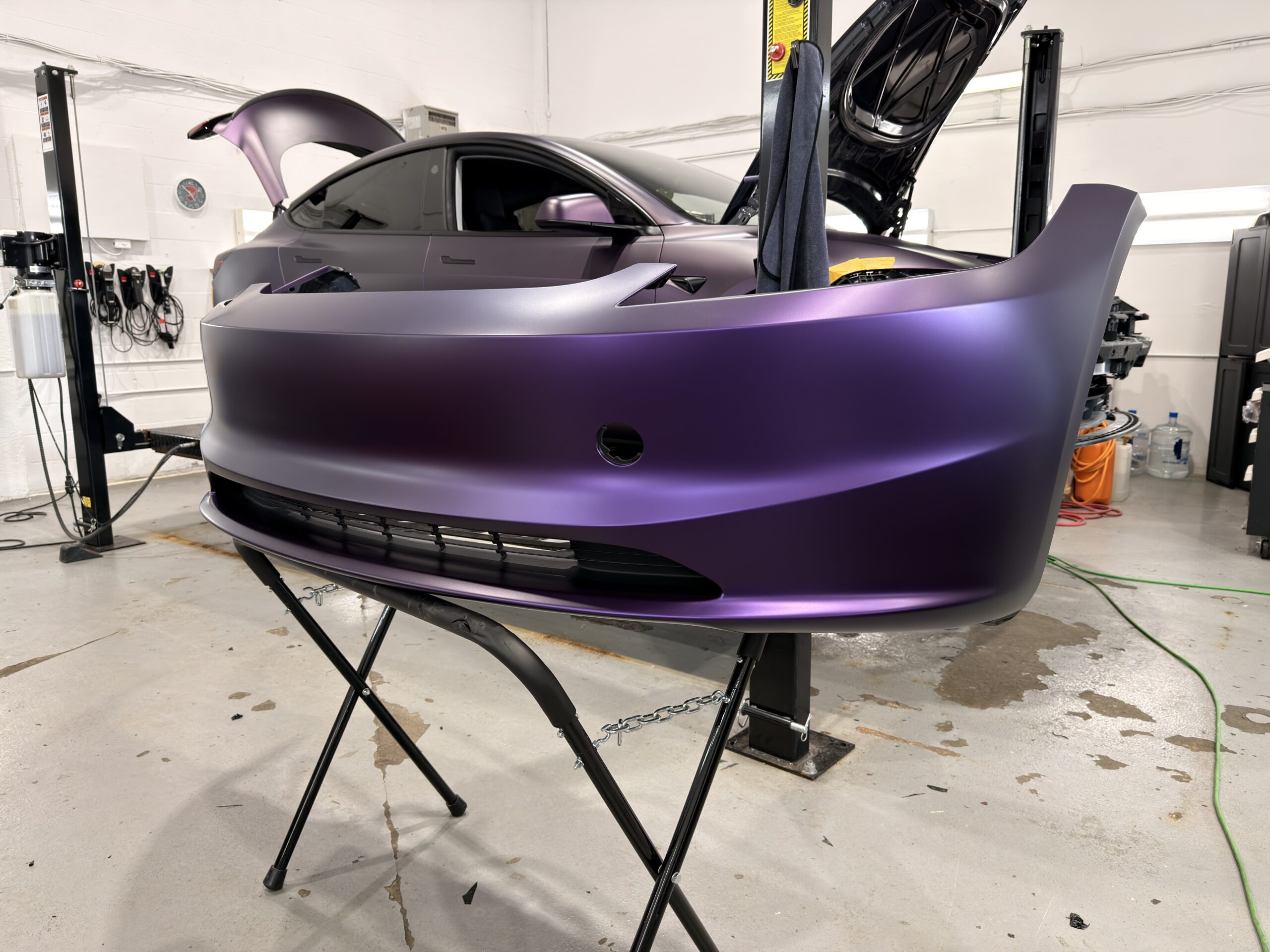
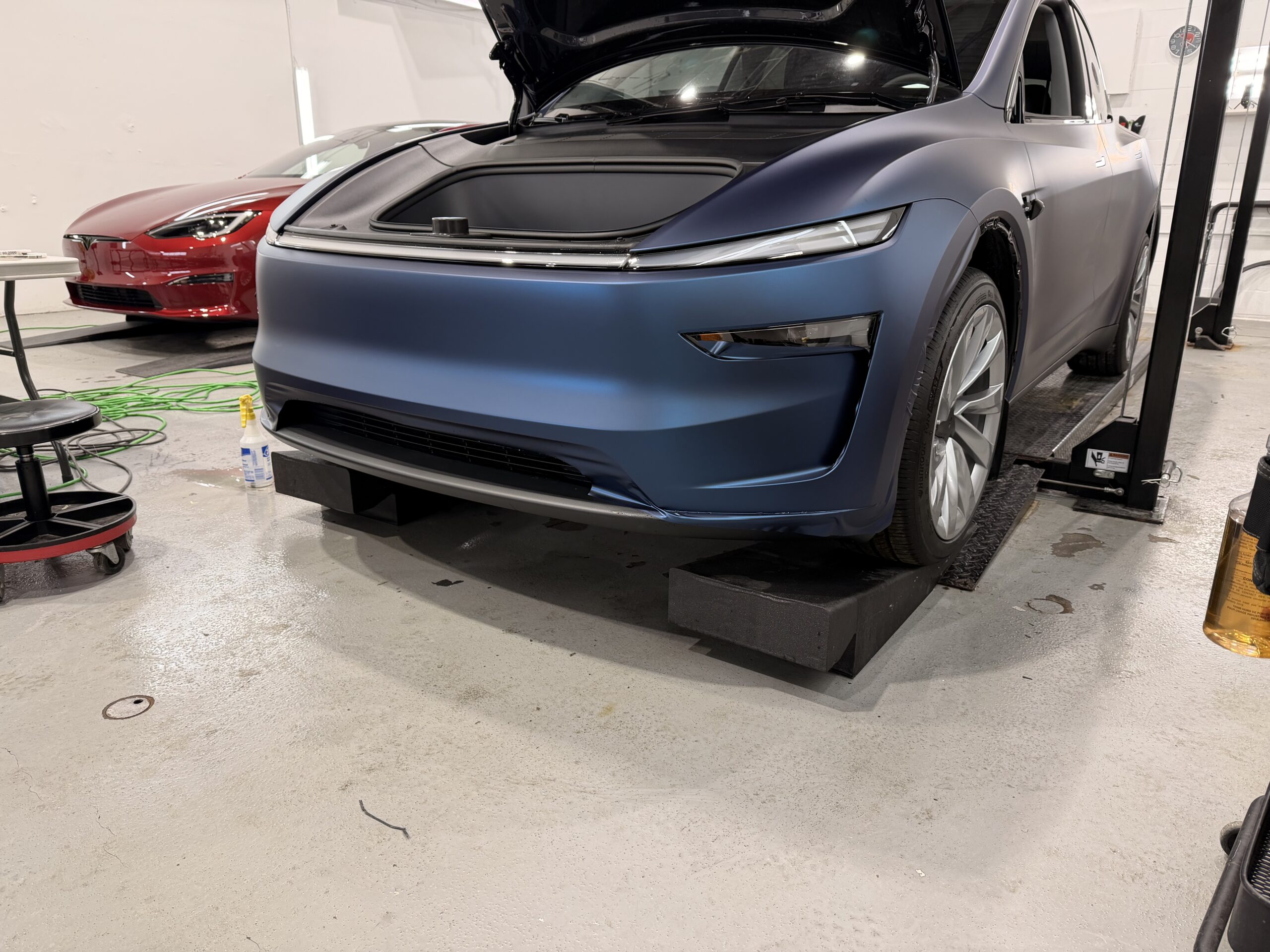
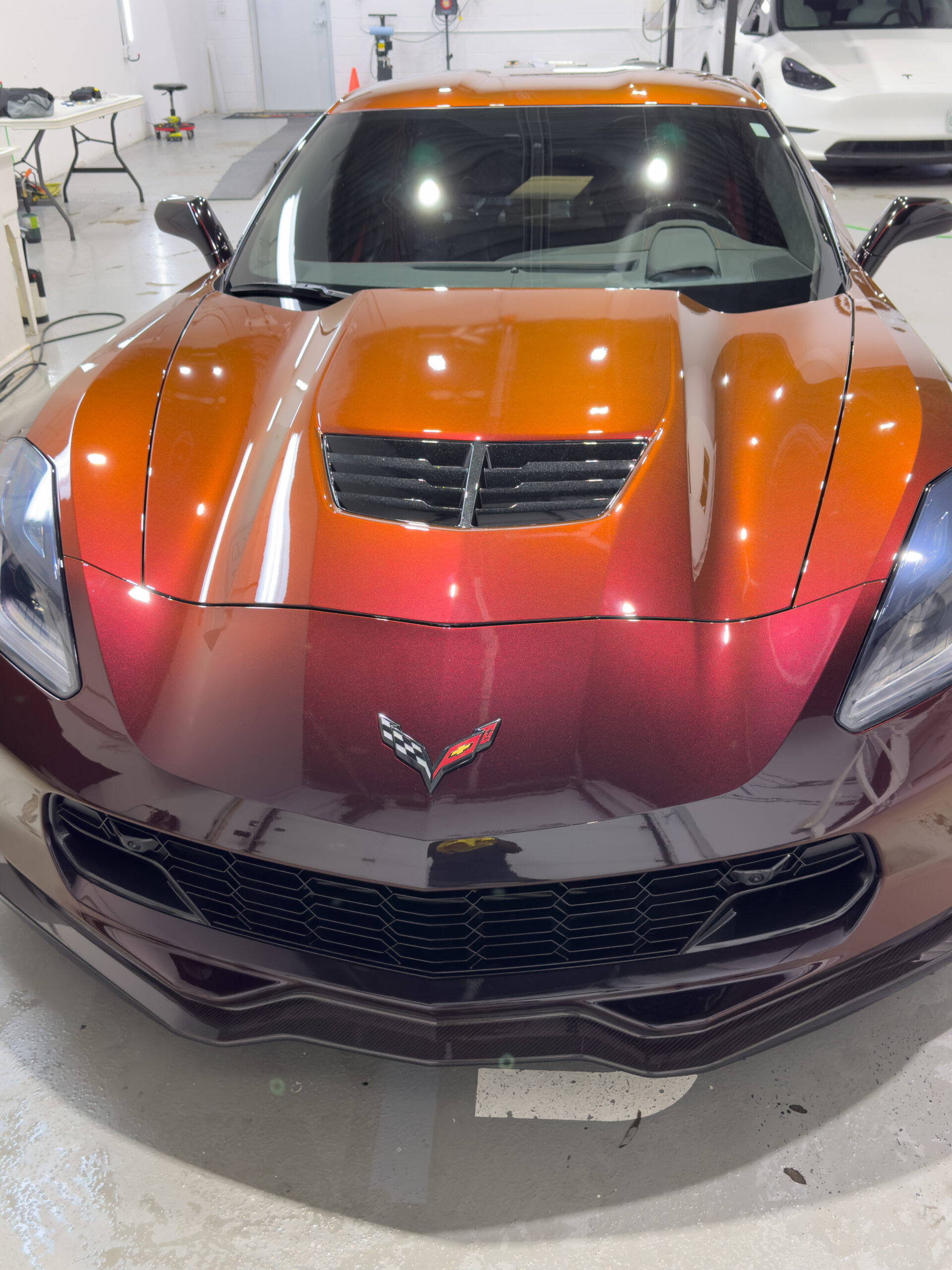
Wrap and film on real vehicles
Clear film going on, a wrap install in progress, and coloured PPF doing both jobs in a single layer.
The Myth Worth Clearing Up
The most common misunderstanding in the vinyl wrap vs paint protection film debate is that a wrap protects your paint the way film does. It does something, but not that.
A wrap will keep light contamination, sun exposure, and washing wear off the paint beneath it, and on those counts it genuinely helps. Where it stops helping is impact. At 3 to 4 mil of PVC, a stone hitting your bumper at highway speed goes through the wrap and marks the paint underneath. Worse, you will not see it until the wrap comes off, because the damage is hidden.
Film is thicker and, more importantly, made of a material chosen for elasticity and impact absorption rather than colour. That difference in purpose is why one absorbs a stone strike and the other transmits it.
Coloured PPF: The Option Most People Miss
Most comparisons stop at the two products and leave you choosing. There is a third answer that makes the choice unnecessary for a lot of owners.
Coloured paint protection film gives you a full colour or finish change with genuine impact protection in the same layer. Colour infused, gloss colour shift, stealth matte, and patterned options all exist. You get the visual transformation of a wrap and the chip resistance of film, without layering two products.
The trade-off is cost. Coloured PPF sits above vinyl wrap because you are paying for protective film, not pigmented PVC. If appearance is the only goal and the car does not see much highway, wrap remains the better value. If you want the look and the protection, coloured film is usually cheaper than wrapping and then filming. The gap has narrowed considerably in recent years as coloured PPF options have expanded, making it a realistic consideration for owners who once would have chosen wrap automatically.
Because appearance varies significantly by film type, we review samples and plan panel placement before installing any coloured film.
Combining the Two
If coloured film is not the route, the practical hybrid is film where impact happens and wrap everywhere else.
A typical combined build:
- Clear PPF on the hood, front bumper, fenders, mirrors, and headlights
- Vinyl wrap across the remaining panels for the colour change
- A ceramic coating over both, for gloss and easier washing
This has to be planned before anything is installed, not bolted together afterwards. Edges have to be mapped so film and wrap meet cleanly at panel lines rather than mid-panel, and the order of installation matters. Retrofitting film onto an already-wrapped car usually means removing wrap.
What Ontario Conditions Do to Each
Southern Ontario is genuinely hard on both products, in different ways.
Highways here, the 401, 404, 400, 407, and DVP among them, carry significant sand, gravel, and road salt through much of the year, which is why front-end chip damage is so common on daily-driven cars. That is a straightforward argument for film on the front of anything that commutes.
For wrap, the bigger stressor is the temperature swing. Repeated freeze-thaw cycling, road salt sitting on edges, and pressure washing at the wrong angle are what lift wrap edges early. A quality wrap may comfortably reach five years in a mild climate, but can need attention sooner here, particularly on lower panels and around wheel arches. Our vinyl wrap care guide covers what actually extends wrap life through a GTA winter.
What Each One Means for Resale
Resale comes up in almost every conversation about these two products, and the two answers are genuinely different.
A wrap protects the factory colour while installed, which can appeal to buyers who value original paint, and it comes off to reveal the colour the car left the factory with. PPF goes further by helping prevent permanent stone chips and road rash, preserving the finish itself rather than simply covering it. One shields the paint from everyday wear; the other stops the damage that cannot be undone.
Neither guarantees a higher sale figure. What both can do is remove a reason for a buyer to negotiate down, and reduce the cosmetic repair you would otherwise pay for before listing.
Why Paint Condition Decides Both
Neither product is a cover-up, and this is where people get into trouble.
Both wrap and film bond to what is already there. Failing clearcoat, deep scratches, rust, or a poor repaint all affect install quality and, more importantly, what happens at removal. Film or wrap applied over compromised paint can lift that paint when it comes off, not because the product failed, but because the surface underneath was never sound.
Fresh repaints need to cure fully, typically 15 to 30 days depending on the system, before either product goes on. Any competent shop inspects paint before quoting and tells you if the answer is bodywork first. If a shop quotes a wrap on visibly failing paint without mentioning the risk, that tells you something.
For a deeper look at film specifically, read our paint protection film guide, or compare film against coatings in PPF vs ceramic coating. Both jobs live or die on install quality.
What We Actually Install
On the wrap side we work with premium cast films including Avery Dennison Supreme Wrapping Film and 3M. Cast film matters here: it conforms to complex curves and recesses without the shrink-back that cheaper calendered vinyl develops, which is what causes edges to lift and corners to pull.
On the film side, body PPF comes from Autobahn Performance Films, including the Incognito line, and windshield protection film is ULTRAFIT WinCrest EVO. Both are available only through authorised installers.
As with anything in this category, the installer matters more than the brand on the box. Premium cast wrap laid over unprepped panels will still lift. Our guidance on choosing an installer applies to wrap work just as much as film.
Common Questions
Does a vinyl wrap protect my paint from rock chips?
Not meaningfully. A wrap keeps contamination, UV, and light wash wear off the paint beneath it, but at 3 to 4 mil of PVC it will not absorb a stone at highway speed. The chip goes through to the paint, and you will not see it until the wrap is removed.
Will a wrap or film damage my paint when removed?
On healthy factory paint, professionally installed and professionally removed within its service life, neither should. The risks are paint that was already compromised, cheap material, and film or wrap left on far past its lifespan. Removal is where poor original paint condition shows up.
Can I put PPF over a vinyl wrap?
It is not the way we would plan a build. Film is designed to bond to paint, and layering it over wrap adds a failure point between two adhesive layers. If you want colour and protection together, coloured PPF in a single layer is the better answer.
Can I wash a wrapped car the same way as a PPF-covered car?
Mostly, but wrap is less forgiving. Both should avoid brush automatics entirely, since spinning bristles catch edges and seams. Use a pH-neutral soap rather than an aggressive degreaser, which can dull wrap finishes and attack adhesive over time. With a pressure washer, keep the nozzle at a shallow angle and well back from any edge or seam, and never aim directly into one. Matte and satin wraps need particular care, as they cannot be polished to correct marring the way gloss paint can. Our vinyl wrap care guide covers the full routine.
Which lasts longer?
Film, by a wide margin. Premium PPF carries a 10-year manufacturer warranty and typically performs 7 to 10 years or more. Quality vinyl wrap generally runs 3 to 5 years, and Ontario winters tend to push that toward the lower end on lower panels.
Is a wrap cheaper than repainting?
Usually yes, and it is reversible, which a respray is not. That combination is why wrap appeals to leased vehicles and to owners who want to change colour without permanently altering the car.
Can I wrap only part of the car?
Yes. Roofs, mirror caps, accent panels, and hoods are commonly wrapped on their own, and partial wraps pair well with film on the front end. It is also a sensible way to test a finish before committing to a full colour change.
Not sure which direction to go?
Tell us what you want the car to look like, how you drive it, and how long you plan to keep it. We install both, plus coloured film that does both jobs at once, so we have no reason to push you toward one over the other.