
Paint Protection Film
An honest answer, including when it is not. Written from what we see on vehicles that commute here every day.
At a Glance
Highway commuter? Usually yes, at least on the front end.
City driving, garage kept? Often not, and we will say so.
Short lease? Depends on kilometres and return standards.
The deciding factor? Highway exposure and how long you are keeping the vehicle.
Most people do not start thinking about paint protection film until they see the first chip.
It usually starts small. A tiny mark on the bumper. A chip on the hood. A bit of pitting that was not there last month. Then, after a few weeks of highway driving, a rough winter, or regular commuting through the GTA, that clean front end starts to lose its edge.
So is PPF worth it in the GTA? For a vehicle that spends real time on the highway and that you plan to keep, usually yes, at least on the front end. For a garage-kept car that rarely leaves the city, often not. The honest answer depends on how you drive, where you drive, and how long you plan to keep the vehicle.
In this region those details matter more than most people expect, and that is what the rest of this guide is about.
Paint protection film is designed to take the hit before your paint does. That is the core value. It is not there to make the vehicle invincible. It is there to protect the areas that see the most abuse.
Constant on highway routes, thrown up by the vehicles ahead of you. The single most common reason drivers come to us, and the damage that cannot be undone.
Sand, gravel, and small impacts that slowly wear down high-impact areas. Individually harmless, cumulatively the reason a three-year-old front bumper looks tired.
Especially hard on lower panels, bumpers, and rocker areas, where it sits rather than washing off.
Wash marring, parking contact, bug residue, and bird droppings. The damage that builds quietly enough that you adapt to it without noticing.
If you are wondering whether PPF is worth it in the GTA, this is where the conversation starts. How much of that wear do you want your paint to absorb, and how much would you rather the film take instead?
For broader context on how winter road salt contributes to corrosion and vehicle wear, the Canadian Automobile Association's winter driving resources are worth a read.
GTA driving is a little bit of everything: highways, construction zones, winter salt, parking lots, traffic, and constant road spray.
Highways like the 401, 404, 400, 407, and DVP create steady exposure to debris at speed. Construction is effectively permanent somewhere on every major route, which means loose aggregate in the traffic stream year round. Even a short commute can put the front bumper, hood, mirrors, and lower panels through a great deal over time.
Winter compounds it. Sanding puts abrasive material directly onto the road at speed, and salt collects on exactly the lower panels that are hardest to keep clean. A vehicle that would age gracefully in a milder climate can look noticeably worn after two or three seasons here.
For drivers in areas like Vaughan, Richmond Hill, North York, and Scarborough, this is not occasional exposure. It is regular driving.
This is the part most owners never see, because by the time film is removed the vehicle has usually changed hands. The damaged film first, then the paint underneath once the film comes off.
The kind of impact that would normally mark the painted surface. In this case, the damage stayed in the film.
Once the damaged film is removed, the original paint underneath is preserved. That is the value people are paying for.
Film can be removed and replaced. Original paint, once chipped through, is much harder to restore perfectly at any price.
The question is rarely whether film is expensive. It is whether it costs less than the alternative, and that comparison gets skipped surprisingly often.
What chip damage actually leads to:
Against that, a front-end film package is a known, one-time figure that protects the panels where nearly all of this happens. That is the actual comparison, and for a highway commuter it is usually not close.
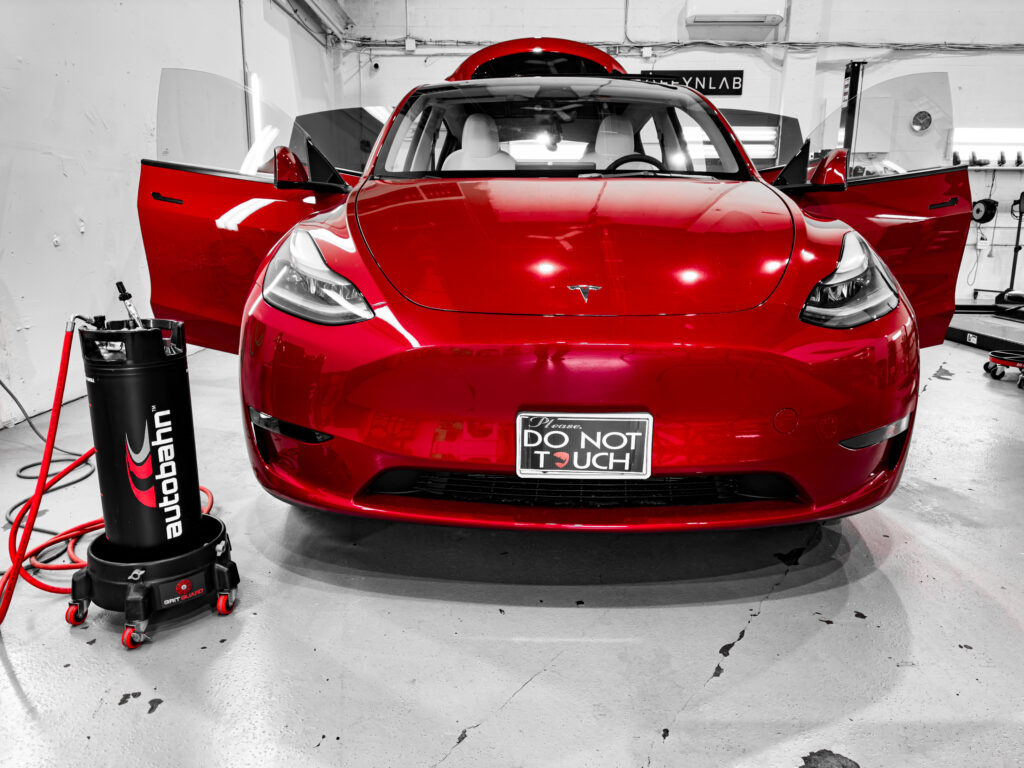
Film on the panels that take the impact, installed at our Markham studio.
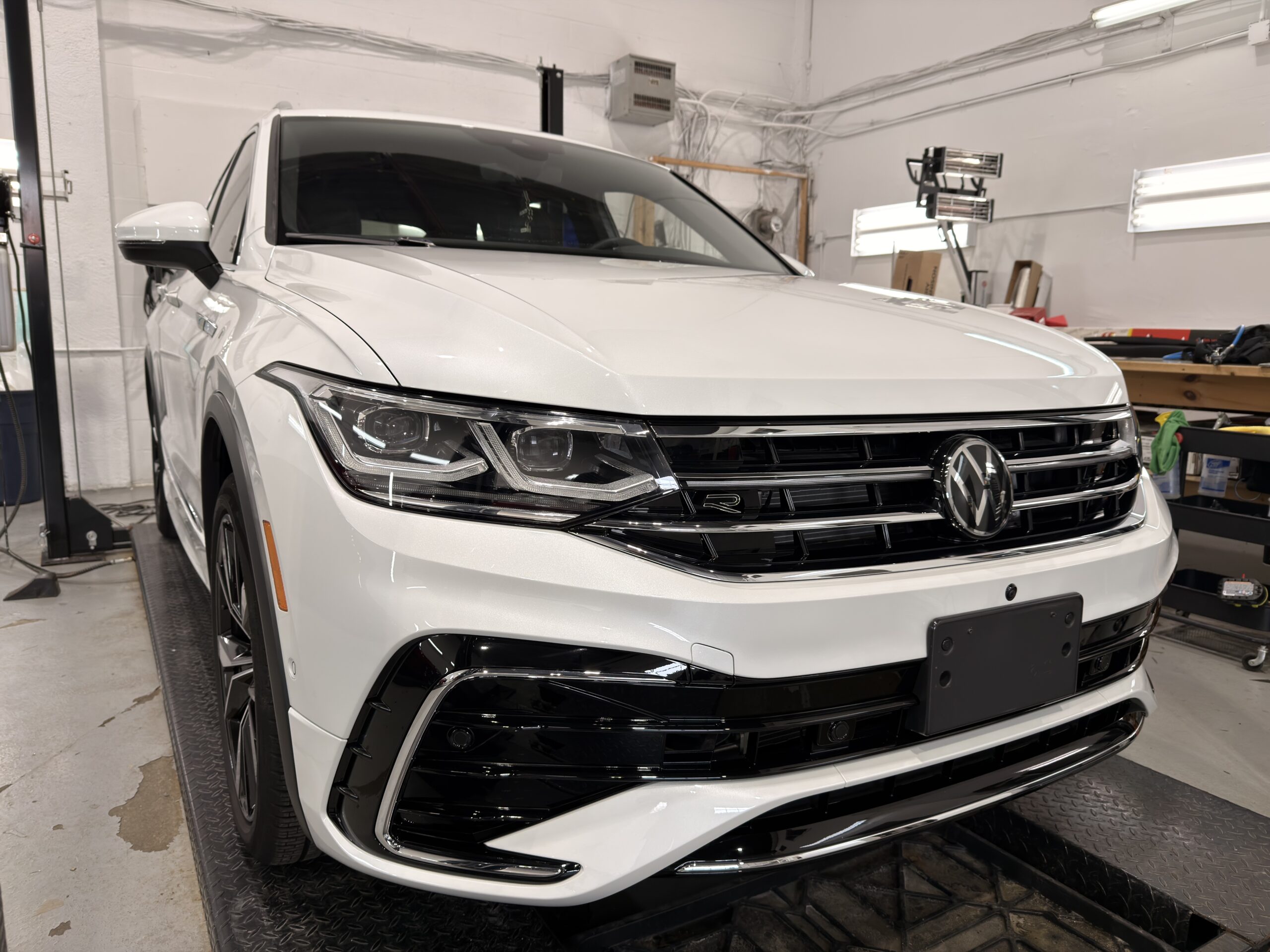
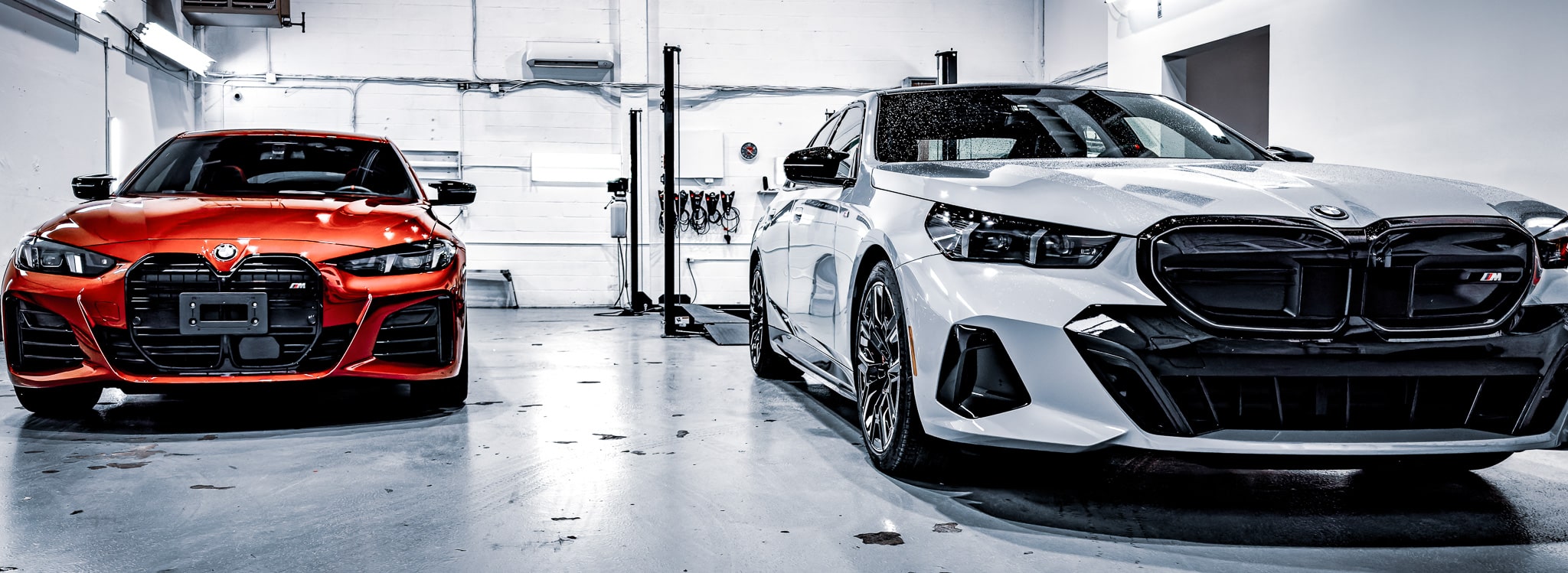
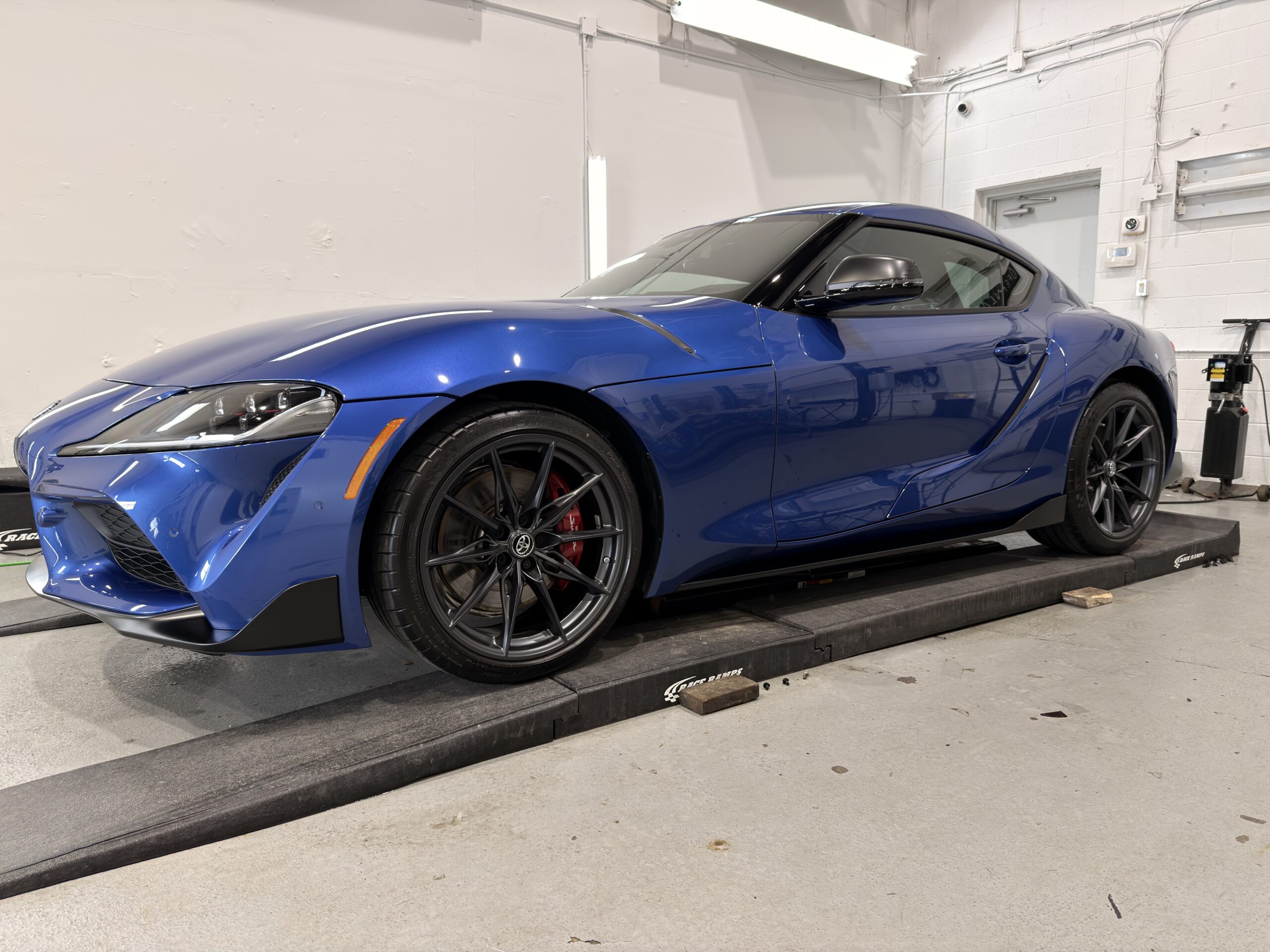
Film tends to make the most sense when the vehicle matters to you beyond basic transportation, and when the exposure is genuinely there.
The case is strong if:
The more you care about keeping the original finish intact, the more sense film usually makes.
Film is valuable, but it is not for everyone. These are the situations where we would suggest scaling back or waiting.
Reconsider, or scale back, if:
This is where honest guidance matters. The right answer is not always the biggest package. The right answer is the coverage that fits how the vehicle is actually used.
Most people do not need full coverage straight away. The right package depends on the vehicle, driving habits, and how long you plan to keep it.
Full hood, partial fenders, full front bumper, mirror faces, and headlights. A practical starting point for front-end protection.
Full hood, full fenders, front bumper, mirror faces, and headlights. Well suited to GTA drivers who want meaningful front-end protection.
A front package extended with rocker panels and A-pillars, which are the next areas to suffer on a vehicle covering serious highway kilometres.
Every exterior painted panel. Best for long-term ownership, premium vehicles, and full-body preservation.
You can see exactly which panels each package covers using the interactive simulator on our paint protection film services page, and our complete guide to PPF covers the film itself in more depth.
Yes, it changes the decision, because the goal changes with how long the vehicle will be with you.
On a lease, the question is narrower: will chip damage cost you at return? A front-end package can help avoid exactly the kind of stone chipping that gets noted on a return inspection. Whether it pays depends on your term length, annual kilometres, and how exposed the vehicle actually is. On a short, low-kilometre lease, often it does not.
On a vehicle you are keeping, film becomes about long-term preservation rather than a single event. You are protecting the finish across years of accumulated wear, and the numbers improve the longer you hold the car.
There is a third case worth naming: a vehicle you intend to sell privately in a few years. Original, unchipped paint is one of the clearer signals to a private buyer that a car has been looked after, and it removes an obvious point to negotiate against.
For a lot of drivers here, yes. Not because it is flashy, but because it solves a real problem. Paint wear accumulates faster in this region than most people expect, and the front end takes nearly all of it. If you notice chips and small imperfections and they bother you, film is usually worth considering. If you are relaxed about cosmetic wear, you may not feel the same value.
Rarely. Damage is not evenly distributed, and the front end typically takes far more impact than the rear. Most drivers get the majority of the benefit from a front-end package. Total coverage makes sense on premium vehicles and long ownership horizons rather than as a default.
It depends entirely on the paint's condition. Film goes over healthy paint and does not repair what is already there, so existing chips stay underneath. On a well-kept used vehicle you plan to keep, it makes good sense. On one with failing clearcoat, address that first.
Treat that as a bonus rather than the reason. Film does not guarantee a higher sale figure. What it does is remove a visible reason for a buyer to negotiate down, and reduce cosmetic repair before listing. The stronger argument is simply that you get to enjoy a clean vehicle for the years you own it.
If highway kilometres are the issue, film first, on the front end, because chips are the damage you cannot undo. A coating adds gloss and easier washing but will not stop a stone. Our comparison of PPF versus ceramic coating covers the trade-off properly.
Premium self-healing film typically performs for seven to ten years or more. Warranty terms depend on the film selected, ranging from a 10-year manufacturer warranty to a limited lifetime warranty. Lifespan depends on film quality, sun exposure, and how the vehicle is washed and stored, and we confirm the exact terms for your film at booking.
In our experience, more. A large share of the complaints we hear about PPF turn out to be installation problems rather than material problems. Our guide on choosing a PPF installer covers what to ask any shop, including ours.
If you are comparing packages, pricing, or trying to work out what makes sense for how you actually drive, reach out. We will walk you through the options clearly, without pressure, including telling you when a smaller package is the better call.