Product Insights

Product Insights

Windshield Protection Film: A Complete Guide

What windshield protection film does, how modern film performs, and how to tell whether your vehicle is a good fit. Written from what we install every week in Markham.

At a Glance

What it does? Absorbs chips and slows the pitting that dulls glass over time.

Why now? ADAS recalibration has made windshield replacement significantly more expensive.

What we install? ULTRAFIT WinCrest EVO, self-healing, clear, heat-gun-free installation.

Best fit? Highway kilometres and ADAS-equipped glass make the strongest case.

What Windshield Protection Film Is

Windshield protection film is an optically clear layer applied to the outside of your windshield. It works on the same principle as paint protection film: a sacrificial surface that takes impact and abrasion so the glass underneath stays clear and intact.

Unlike paint, windshield glass cannot simply be polished back to factory condition once pitting develops. Every chip, every scratch, and every tiny impact is permanent. Film gives that surface something to hide behind, and it is the only product that does.

Your windshield is one of the most exposed surfaces on the vehicle. Unlike body panels, it constantly meets airborne debris at highway speed and cannot flex or self-repair after impact. Every trip slowly changes its surface, even when you never notice it happening.

Although it works on the same sacrificial-layer principle as paint protection film, windshield protection film is engineered specifically for optical clarity and the demands of automotive glass. It is a separate service from body PPF, and it can be added to any coverage package or installed entirely on its own.

Why It Matters More Than It Used To

Two things have changed the calculation, and both point the same direction.

Replacement costs have climbed sharply

Modern windshields are thinner, more sharply curved, and increasingly carry ADAS hardware, the cameras and sensors mounted behind the glass. Modern windshields often support lane-keeping assistance, forward collision warning, rain sensors, automatic high beams, and adaptive cruise systems.

A decade ago, replacing a windshield usually meant replacing a piece of glass. Today, many vehicles require recalibration of forward-facing cameras and safety systems after replacement. Depending on the manufacturer, that additional work can significantly increase the total replacement cost, on a component that used to be a straightforward few hundred dollars.

It is the same long-term ownership question we work through in is PPF worth it in the GTA: what a repair actually costs you later, against what protection costs now.

Pitting builds quietly

Chips get noticed. Pitting does not. Thousands of impacts too small to chip the glass gradually frost the surface, and because it happens over years you adapt without registering it. Where it shows up is at night, driving into oncoming headlights, when the whole windshield hazes and scatters light. That glass is not broken, so it rarely gets replaced. It is simply permanently worse than it was.

Film addresses both. It absorbs the strikes that would chip, and it takes the constant low-level abrasion that causes pitting.

What We Install, and What It Does

We install ULTRAFIT WinCrest EVO, part of the WinCrest series of windshield protection films.

What the film brings:

  • Self-healing topcoat. WinCrest is the first windshield film series built with paint-protection-grade self-healing. Light scratches and surface abrasion close up with heat from the sun.
  • Anti-delamination engineering. Purpose-built to stay bonded to the glass across seasons and temperature swings.
  • Heat-gun-free installation. A cleaner, more controlled process with less thermal stress on glass that has sensors mounted behind it.
  • Premium UV rejection. Protects the cabin and interior, and reduces UV exposure for whoever is behind the wheel.
  • Glare reduction. Noticeable in low winter sun and against oncoming headlights.
  • Crystal-clear clarity. No hazing or distortion from the moment of installation.
  • Removal-friendly adhesive. Comes off cleanly when the time comes, with no residue left on the glass.

The self-healing property is the one worth dwelling on. Paint protection film has had self-healing topcoats for years; bringing that same chemistry to glass is recent, and it is what keeps a windshield film looking clear rather than accumulating fine wiper marring over a season.

What Windshield Protection Film Does Not Do

Setting expectations properly is part of the job, so here is the honest boundary of what this product delivers.

Windshield film does not:

  • Make glass unbreakable. A large stone at highway speed can still crack a windshield, filmed or not.
  • Eliminate every chip. It absorbs a great deal, and it dramatically reduces the small stuff, but it is not a guarantee against all impact.
  • Repair existing damage. Film goes over healthy glass. A chip or crack that is already there needs addressing first.
  • Replace careful driving. Following distance behind gravel trucks and construction traffic still does more for your glass than any product.

What it does do is take the constant, cumulative abrasion that quietly ages a windshield, and absorb the smaller impacts that would otherwise become chips. Over the life of a vehicle, that is where the value sits.

What the Warranty Covers

WinCrest EVO carries a 6-month manufacturer warranty against peeling, fading, cracking, and delamination.

It is worth being clear about what that covers, because a windshield film warranty works differently from the 10-year warranty on our body PPF. It covers manufacturing defects, meaning the film failing when it should not.

It does not cover rock chip damage absorbed by the film, or wiper-related wear. Both of those are the film doing exactly the job you bought it for, on the most abraded surface of the vehicle. Film that has taken a hard strike has done its work, and that becomes a replacement rather than a warranty claim.

We would rather set that expectation up front than have the conversation later.

Windshield Shape and Vehicle Fit

Windshield curvature varies enormously between vehicles, and it affects both how the film forms during installation and how it performs afterwards.

Upright windshields

Jeep Wrangler, Ford Bronco, and G-Wagon-style glass sits close to vertical, so debris arrives closer to head-on rather than glancing off. These vehicles see the most benefit.

Steeply raked glass

Sports cars and modern sedans deflect more debris but present complex compound curves. The film has to form evenly so tension distributes across the glass rather than collecting at the edges.

Panoramic and EV glass

Large single-piece windshields, common on vehicles like the Model X, are among the most expensive to replace and are often sensor-dense. High replacement cost makes the strongest case.

ADAS-equipped glass

Anything with a camera housing behind the mirror needs the film positioned so it never sits in the sensor's field of view. That is planned before installation begins.

This is why we assess the specific vehicle rather than quoting from a chart. How the film forms on your glass is what determines how it looks and how long it lasts.

Ontario Driving Conditions

Southern Ontario asks a lot of a windshield. Highways here, the 401, 404, 400, 407, and DVP among them, carry significant sand, gravel, and road salt through much of the year, and winter sanding puts abrasive material directly into the traffic stream at speed.

Add repeated freeze-thaw cycling, and a windshield that already has a chip is considerably more likely to run into a crack overnight. Glass that might stay clear for years in a milder climate can show visible pitting within a couple of seasons of GTA commuting.

That is the practical case for film here: not that the glass will suddenly fail, but that it degrades faster than most drivers expect, and that degradation cannot be reversed.

Is It Right for Your Vehicle?

Windshield film makes more sense on some vehicles than others, and we would rather help you place yours accurately.

Strongest fit

ADAS-equipped vehicles, daily highway commuters, panoramic or OEM-only glass, and upright windshields on trucks and off-road SUVs. High replacement cost plus high exposure.

Worth discussing

Mixed city and highway driving, or a vehicle you plan to keep long term where pitting will accumulate over the ownership period.

Less compelling

City-driven, garage-kept vehicles that rarely see highway speeds, or inexpensive glass with no sensors behind it.

Address first

Glass that is already chipped. Film goes over healthy glass and does not repair existing damage, so a resin repair comes first.

The case strengthens as replacement cost and highway kilometres rise. We will give you a straight read on where your vehicle sits.

Living With It

Keep the glass clean and avoid aggressive wiping for the first 48 hours so the film fully sets. After that it asks very little: replace worn wiper blades promptly, since a torn blade drags its carrier across the surface, and clear ice from the glass edges with a scraper rather than working directly over the filmed area.

If you are already considering film for your paint, our paint protection film guide covers how the two services fit together, and the PPF page has an interactive coverage simulator.

Common Questions

Will windshield film stop my glass cracking?

It meaningfully reduces the risk from smaller impacts and slows pitting, which is the damage most drivers never account for. It is not armour. A large stone at highway speed can still crack glass. What it reliably does is absorb the constant low-level abrasion that degrades a windshield over years.

Will I see it, or notice any distortion?

No. Clarity was the non-negotiable requirement when we chose what to install, because a windshield is the one surface where optical compromise is unacceptable. WinCrest EVO installs crystal clear with no hazing or distortion.

Does it interfere with ADAS cameras or sensors?

Not when installed correctly. The film is positioned so it does not sit in the field of view of the sensor housing behind the mirror. That placement is planned before installation, which is one reason vehicle-specific assessment matters.

Why is the warranty six months?

Because it covers manufacturing defects such as peeling, fading, cracking, and delamination, rather than normal use. A windshield is the most abraded surface on a vehicle, and chip damage absorbed by the film or wiper wear are the film performing as intended.

Does insurance cover windshield protection film?

Usually not. Most policies treat protective film as an optional upgrade rather than a repair, so it is generally an out-of-pocket cost. What varies is glass coverage on the windshield itself, since some comprehensive policies in Ontario include glass repair or replacement with a reduced or waived deductible, which changes how the film pays for itself. Worth a call to your provider before you decide, since the answer differs by insurer and policy.

Can the film be replaced without replacing the windshield?

Yes, and that is the entire point of a sacrificial layer. When the film has taken enough damage, it comes off and a fresh piece goes on, while the glass underneath stays exactly as it was. Replacing film is a fraction of the cost of replacing an ADAS-equipped windshield, and it needs no recalibration.

Can it be removed later?

Yes. WinCrest uses a removal-friendly adhesive, so it comes off cleanly without leaving residue on the glass.

Can it go on a windshield that is already chipped?

Address the chip first. Film goes over healthy glass, and covering an existing chip makes it harder to reach with a resin repair later. Once the glass is sound, film protects it from there.

Does it help with glare and heat?

It rejects UV and reduces glare, which is noticeable in low winter sun and against oncoming headlights at night. If cabin heat is your main concern, our automotive window tint page covers ceramic films built specifically for heat rejection.

How long does installation take?

A windshield film installation is typically completed in a single visit. We confirm timing when we assess the vehicle, since windshield size and curvature affect how long the film takes to form and set.

Find out whether your windshield is worth protecting

Tell us the vehicle, how you drive it, and whether it has ADAS hardware behind the glass. We will give you a clear answer on how the replacement cost compares to the film, and what we would recommend.

Product Insights

The Complete Guide to Paint Protection Film

A paint protection film guide covering what PPF actually does, where it genuinely earns its cost, and where it does not. Written from what we see on real vehicles in the Markham studio.

What Paint Protection Film Actually Is

Paint protection film is a transparent thermoplastic urethane layer bonded to your vehicle's painted surfaces. You may hear it called clear bra, stone guard, or simply PPF. Whatever the name, the job is the same: give the paint a sacrificial layer that absorbs impact so the factory finish underneath stays sealed.

The word sacrificial is the important one. PPF is not a coating that makes paint tougher. It is a physical barrier that takes damage instead of your paint, and that is a meaningfully different thing. When the film has absorbed enough abuse, you replace the film. The paint beneath it is untouched and original.

This is the distinction most people miss: a ceramic coating improves gloss and chemical resistance but offers essentially no impact protection. PPF is the only product engineered to physically stop a stone chip. They solve different problems, and the strongest setup is usually both. Our PPF vs ceramic coatings guide covers the comparison in full.

Modern premium film is roughly 8 mil thick and self-healing, meaning the topcoat is formulated to reflow and close light scratches and wash marring when warmed by sunlight or hot water. That property is real, but it has limits worth understanding, which we cover below.

We install film from two manufacturers. Autobahn Performance Films supplies our body PPF, including the Incognito line, backed by a no-hassle manufacturer warranty. ULTRAFIT supplies our windshield protection film, the WinCrest EVO series, which is the first windshield film range built with paint-protection-grade self-healing technology. Both are available only through authorised installers rather than over the counter, which is normal for professional-grade film.

Watch: What It Looks Like When the Film Does Its Job

Most of the PPF conversation happens in the abstract. This is the part owners rarely get to see, because by the time film is removed the vehicle has usually changed hands.

Film can be removed and replaced. Original factory paint, once chipped through to primer, cannot be restored perfectly at any price. That asymmetry is the entire argument for PPF, and it is worth keeping in mind through the rest of this guide.

The Seven Things PPF Genuinely Does

1. Stops rock chips and road debris

This is the primary job and the reason most vehicles get filmed. The film absorbs the energy of gravel, stones, and highway debris before it reaches paint. In the GTA this matters more than people expect: the 401, 404, 400, 407, and DVP throw a steady supply of loose aggregate, and construction zones are effectively permanent. Front bumpers, hoods, and leading fender edges take the worst of it.

2. Resists UV and chemical contamination

PPF shields the clearcoat from sustained UV exposure that dulls and fades finish over time, particularly on horizontal panels. It also takes the chemical hit from bird droppings, tree sap, bug splatter, and road salt. All four are acidic or corrosive and all four etch clearcoat if left to sit. The film absorbs that damage instead.

3. Stays visually invisible, or changes the look deliberately

Installed properly on healthy paint, high-gloss clear film disappears. Edges are wrapped where panel geometry allows, so there is no visible line announcing where protection stops. If you would rather the film change the vehicle's appearance, that is also an option: stealth matte converts gloss paint to satin, and coloured PPF delivers a full colour change while still providing genuine impact protection.

4. Makes the vehicle easier to keep clean

Premium films have hydrophobic topcoats, so water beads and sheets off rather than clinging, and contaminants have less to grip. Washing gets faster and water spotting is reduced. This is a real convenience benefit, though a modest one compared to the impact protection, and it is where a ceramic coating on top of the film adds the most.

5. Self-heals light surface damage

The topcoat reflows with heat, so swirl marks, wash marring, and fine scratches close up on their own in sunlight or under warm water. Set expectations correctly here: self-healing addresses surface-level marring. It does not repair a gouge that has cut through the film, and it will not undo impact damage that pierced the layer. Film that has taken a deep hit has done its job and is a candidate for replacement of that panel.

6. Protects resale and lease-return value

A vehicle with undamaged original paint is worth meaningfully more than the same vehicle with a stone-blasted front end, and it is far easier to sell. On leases, a filmed front end can avoid chip-related charges at return. Whether the maths works depends on your term length, kilometres, and how exposed the vehicle is, which we walk through in is PPF worth it in the GTA.

7. Scales to your budget and how you drive

Coverage is not all-or-nothing. You can protect the panels that actually take impact and leave the rest, which is what most drivers should do. That flexibility is what makes PPF accessible rather than an exotic purchase.

Film finishes we install

Every finish below delivers the same impact protection. What changes is how the film reads on your paint.

High gloss clear paint protection film installed in Markham, paint protection film guide finish example Stealth matte paint protection film converting gloss paint to satin finish Colour infused paint protection film delivering colour change with impact protection Gloss colour shift paint protection film that changes hue with viewing angle

How Coverage Options Work

Packages exist because damage is not evenly distributed. The front of a car takes overwhelmingly more impact than the rear, so protection is usually bought front-first and extended outward from there.

Partial Plus

Full hood, partial fenders, full front bumper, mirror faces, and headlights. The balanced entry point for everyday drivers who want the high-impact zone covered without full-panel pricing.

Full Frontal

Full hood, full fenders, front bumper, mirror faces, and headlights. The right call for high-kilometre and highway-driven vehicles, and the most commonly chosen package.

Total Coverage

Every exterior painted panel. Maximum long-term protection against chips, wash marring, and road rash. Best suited to premium, exotic, and long-term-ownership vehicles.

Targeted add-ons

Rocker panels, door cups, A-pillars and roof edge, luggage loading area, and headlights can each be added individually to any package or installed on their own.

What to Weigh Before Committing

Installer skill matters more than film brand

This is the single most important thing in this guide. Premium film installed carelessly looks worse and fails sooner than mid-tier film installed with discipline. Edge wrapping, panel alignment, handling of complex curves, and knowing when to remove a panel for cleaner edge work are all installer variables, not product variables.

Ask any shop how they handle edges, whether they remove badges and trim, what their installation warranty covers, and how long the vehicle will be with them. Rushed PPF is bad PPF. Our guide on how to choose a PPF installer covers what to look for and what should concern you.

Understand the two separate warranties

There are normally two, and they cover different things. The manufacturer warranty on premium film runs 10 years against defects such as yellowing, cracking, peeling, blistering, and delamination. The installation warranty is separate and shorter, covering workmanship faults like lifting or edge failure. Ours is one year. A shop that offers only one of the two is telling you something.

Paint condition is a prerequisite, not a detail

Film bonds to what is already there. Failing clearcoat, deep scratches, rust, or heavy existing stone damage all affect both install quality and the safety of future removal. Fresh repaints need to cure fully, typically 15 to 30 days depending on the system, and repainted panels should carry a signed waiver before film goes on. Any competent installer inspects paint before quoting.

Maintenance is light but not zero

Wait roughly 72 hours after installation before the first wash so edges fully set. After that, remove bird droppings and bug residue promptly rather than letting them sit, wash when panels are cool rather than hot, and avoid brush automatics. Touchless washes and normal pressure washing are fine; just avoid aiming high pressure directly into film edges.

When PPF Is the Wrong Answer

An honest guide has to include this section. PPF is not correct for every vehicle, and the biggest package is not automatically the best recommendation.

Reconsider, or scale back, if:

  • The paint is already failing. Film over compromised clearcoat can make removal riskier later.
  • It is a short, low-kilometre lease on an entry-level vehicle where light cosmetic wear is acceptable at return.
  • The vehicle is garaged, rarely driven, and almost never sees highway speeds.
  • Budget only stretches to full coverage in cheap film. A quality front-end package beats total coverage in poor material every time.

For a garage-kept weekend car that sees little highway use, a ceramic coating alone often makes more sense than film. The right recommendation depends on how the vehicle is actually used, not on what generates the largest invoice.

Paint Protection Film Guide Verdict: Is It Worth It?

For a daily-driven vehicle in the GTA that spends real time on the highway, a front-end package is one of the more defensible protection purchases available. It targets the exact zone that takes damage, it is removable, and it preserves the one thing on a car that cannot be perfectly restored.

For total coverage, the calculus shifts toward vehicle value and ownership horizon. On a premium or exotic car you intend to keep, full protection is straightforward to justify. On a mid-market car you will trade in three years, a targeted package almost always represents better value.

If you take one thing from this paint protection film guide, make it this: the genuinely wrong move is buying the largest package from the cheapest installer. Coverage and installation quality are not interchangeable, and of the two, installation is what determines whether the film performs or fails.

Common Questions

How long does paint protection film last?

Premium self-healing film typically performs for 7 to 10 years or more, backed by a 10-year manufacturer warranty against yellowing, cracking, peeling, blistering, and delamination. Actual lifespan depends on film quality, sun exposure, climate, and how the vehicle is washed and stored.

Will PPF damage my paint when it is removed?

Premium film professionally installed on healthy factory paint and removed by an experienced installer comes off cleanly without damaging the paint underneath. The risk factors are paint that was already compromised, cheap entry-level film, film left on far past its service life, or improper removal technique.

Does PPF really self-heal?

Yes, within defined limits. The topcoat closes light swirl marks and surface scratches when warmed by the sun or hot water. It does not repair deep gouges or damage that has pierced through the film.

Can I put a ceramic coating over PPF?

Yes, and for many owners it is the most complete setup. A coating formulated for film surfaces adds gloss, chemical resistance, and easier cleaning on top of the impact protection the film already provides.

Does PPF turn yellow over time?

Modern premium film resists yellowing for the life of the film. Older generations of PPF were prone to it under UV exposure, but current self-healing polyurethane films use UV stabilisers that hold clarity for years.

How long does installation take?

Most full frontal installations take 2 to 3 days. Total coverage typically runs 5 to 7 days depending on the vehicle, the panels involved, and any panel removal required. Smaller add-ons can usually be completed in a day.

Will the edges be wrapped?

Wherever panel geometry allows, including hoods, doors, fenders, and trunks. Where wrapping is not feasible by design, film is aligned precisely to the panel edge for the cleanest possible finish.

Not sure which coverage fits your vehicle?

Tell us how you drive, how long you plan to keep the car, and what matters most to you. We will recommend the coverage that fits rather than the one with the biggest line item, and we will tell you if PPF is not the right call.

Product Insights

Window Tinting Benefits: What Tint Actually Does

Six real benefits, what tint does not do, and how Ontario rules actually work. Written from what we install every week at our Markham studio.

At a Glance

Biggest real benefit? Heat rejection and glare control, not darkness.

Darker means cooler? No. Film technology drives heat rejection, not shade.

Ontario rules? Front glass is tightly restricted, rear glass is not.

Worth upgrading to ceramic? For heat and signal performance, yes.

The Six Window Tinting Benefits

Tint gets bought for looks and kept for comfort. These are the benefits that actually show up in daily driving, roughly in the order our clients tell us they notice them.

1. Solar heat rejection

The one people feel immediately. Quality film blocks a substantial share of the infrared energy in sunlight, which is what actually heats a cabin. A car that used to be unbearable after an afternoon in a parking lot becomes merely warm. Air conditioning reaches a comfortable temperature faster and works less hard to hold it.

2. Glare control

Low winter sun in this part of the world sits directly in your eyes for much of the morning and afternoon commute. Film cuts that, along with headlight glare at night. Less squinting means less fatigue on a long drive, and it is the benefit most people underestimate before they have it.

People often think glare only matters during the day. In reality, many customers notice the biggest difference driving home after dark, when modern LED headlights are significantly harsher than the older halogen lights most of us learned to drive with.

3. UV protection

Quality film rejects the overwhelming majority of ultraviolet radiation. That matters for your interior, since UV is what fades upholstery, cracks dashboards, and degrades trim over years. It also matters for you, particularly on the arm and side of the face nearest the glass on a daily commute. For broader context, see the Health Canada sun safety guidance.

Families often choose ceramic film for exactly this reason. Children spend years sitting directly beside side glass that lets in substantial UV and heat, and rear seats rarely get the airflow the front does. Tint makes long summer drives noticeably more comfortable for rear-seat passengers.

4. Interior preservation

Heat and UV together are what age an interior. Leather dries and cracks, plastics become brittle, and colours shift. On a vehicle you plan to keep or resell, a cabin that still looks new is worth real money, and it is the kind of wear that is effectively impossible to reverse once it has happened.

5. Privacy

Tinted rear glass makes it harder to see what is inside a parked vehicle, which is a straightforward deterrent for opportunistic theft. It also simply feels better in traffic and in car parks. This is the benefit where Ontario rules matter most, because rear glass is where you have real freedom to go dark.

6. Appearance

A properly tinted vehicle looks finished. Clean edges, consistent shade across matched glass, and no light gaps at the top of the door glass. It is worth saying plainly that appearance is a legitimate reason to buy tint, and it is what brings most people through the door. The rest of the benefits are what make them glad afterwards.

Tint we have installed

Clean edges, consistent shade across matched glass, no light gap at the top of the door windows.

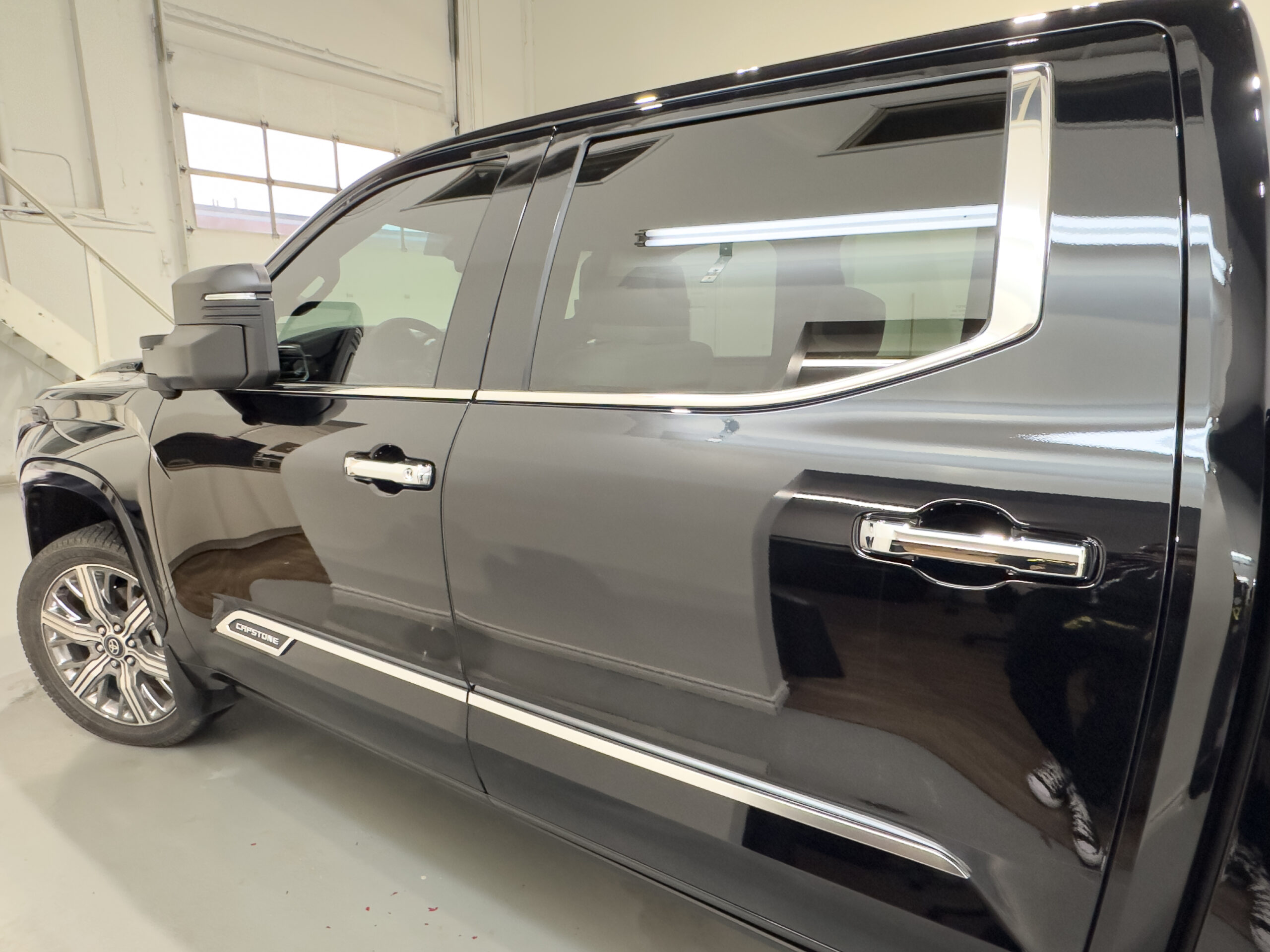
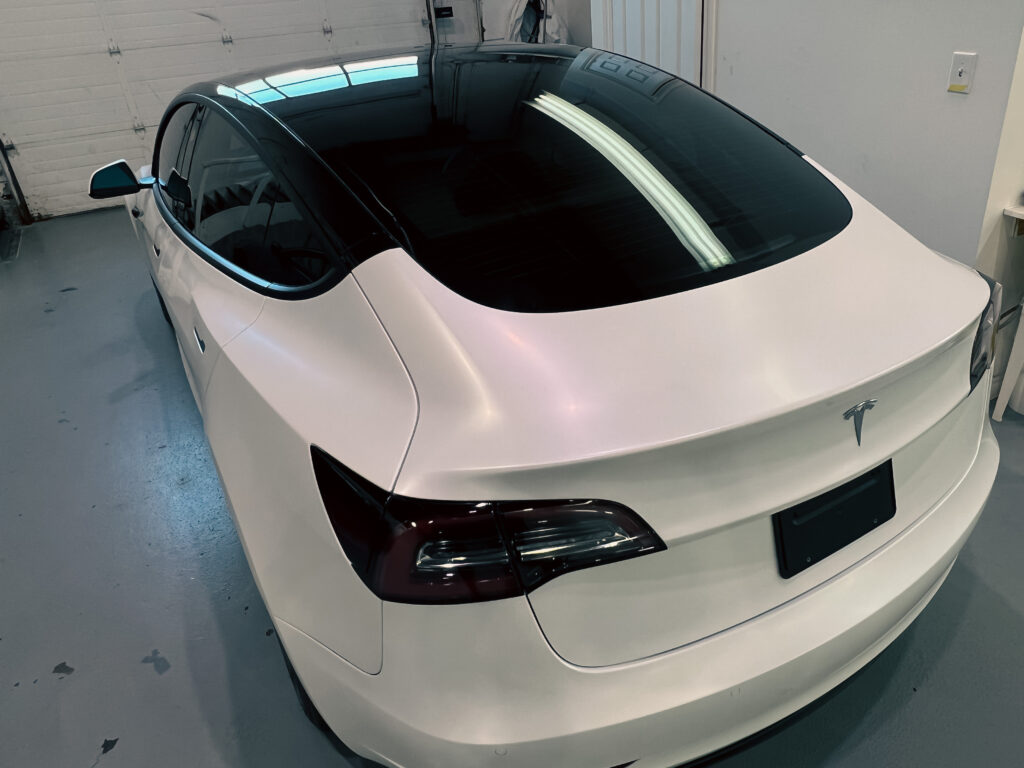
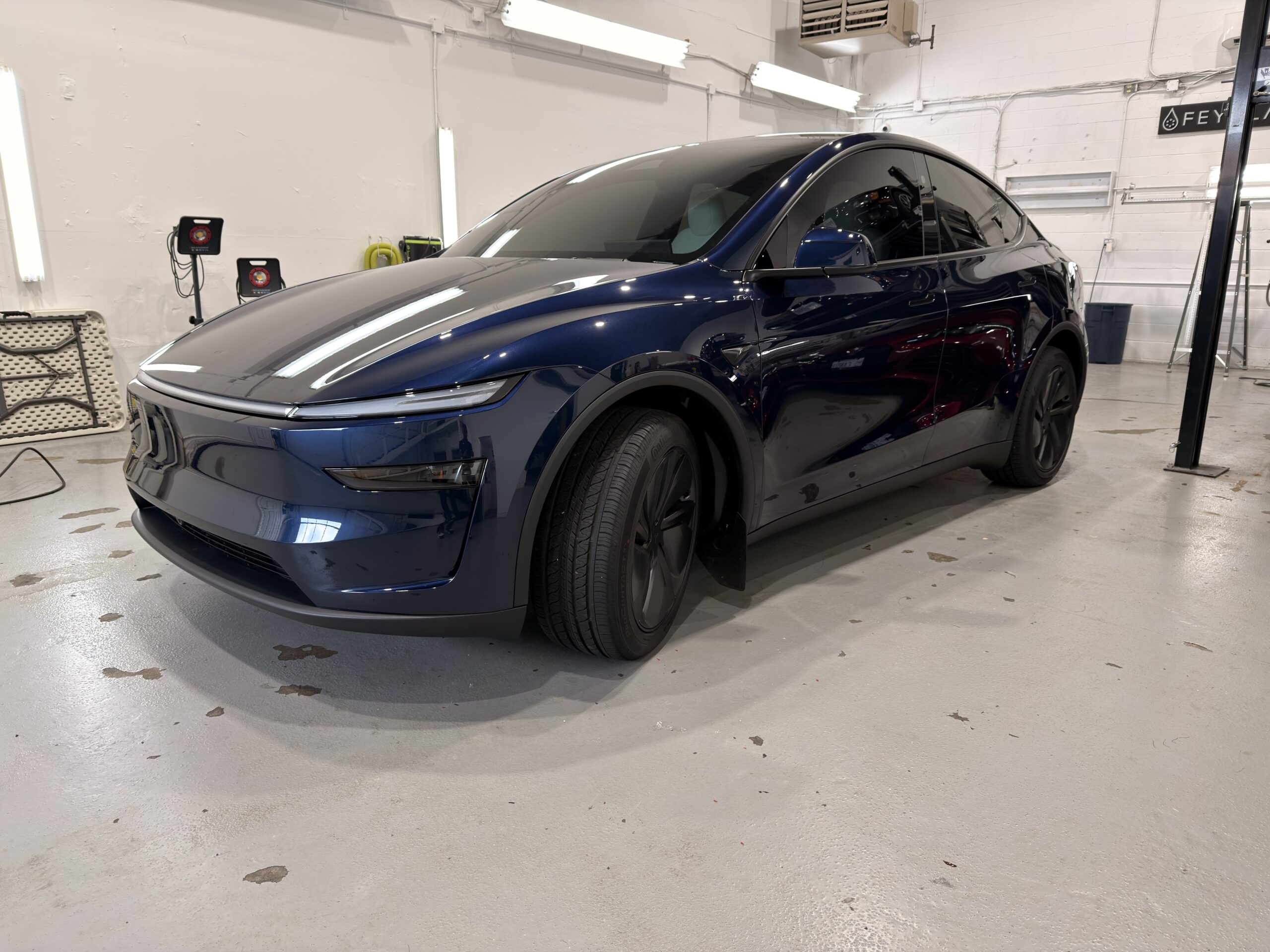
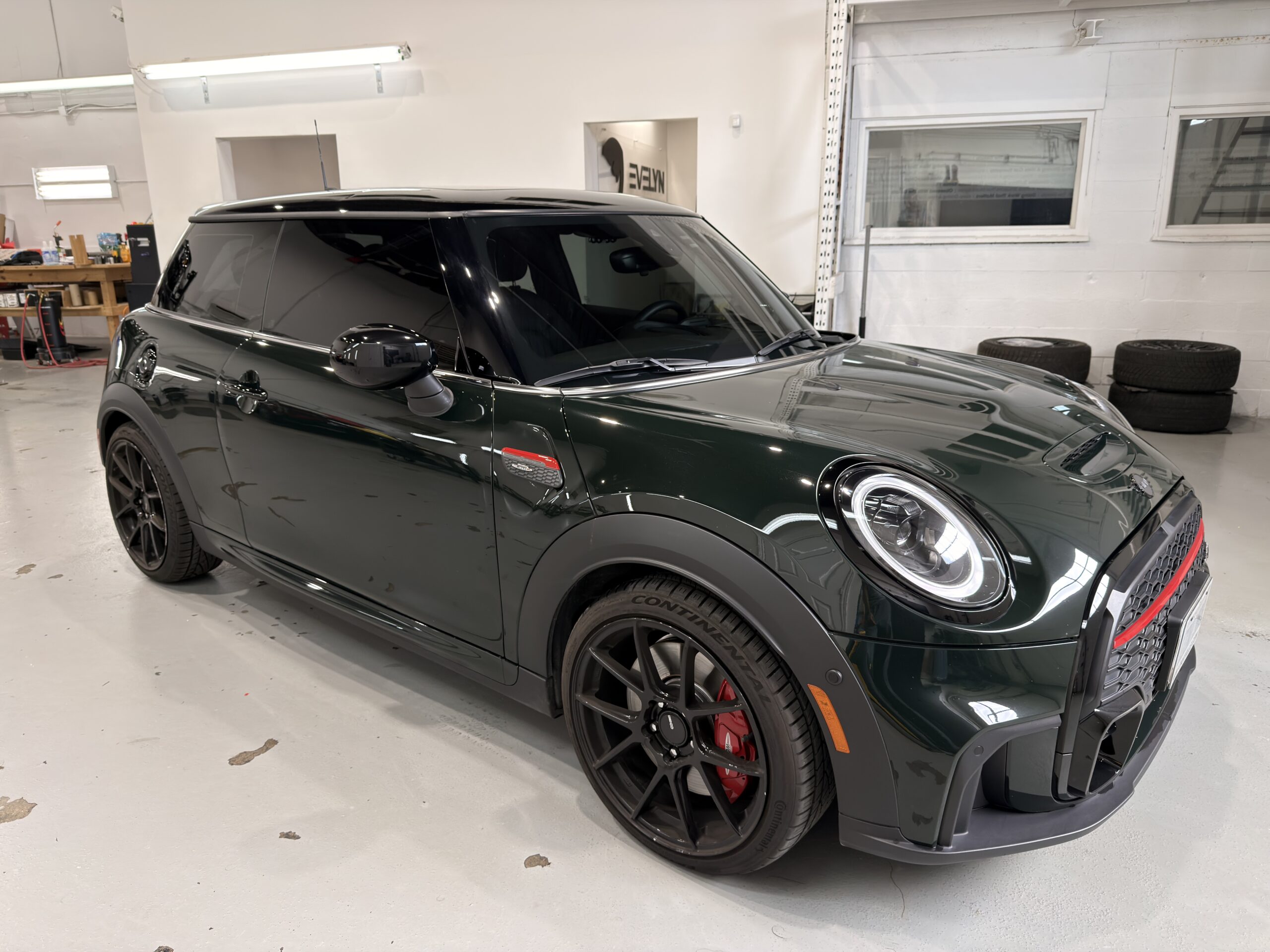
Window tinting benefits on show: ceramic tint installed on a pickup truck in Markham Two tone tint installation on a Tesla Model 3 with matte finish Ceramic window tint installation in progress at the Markham studio Completed window tint showing even shade across matched glass

Why Darker Does Not Mean Cooler

This is the most common misunderstanding in window tint, and it costs people money in both directions.

Darkness is measured as VLT, or visible light transmission. It describes how much visible light passes through, and it says almost nothing about heat. Heat rejection comes from how the film handles infrared energy, which is invisible. A cheap dark film can reject less heat than a quality film that is barely tinted at all.

That is why a nearly clear ceramic film on a windscreen or front glass can make a real difference to cabin temperature, while a very dark dyed film mostly just makes the car dark. If heat is your priority, ask about infrared rejection rather than choosing a shade number.

What Tint Does Not Do

Being clear about limits is part of specifying this properly.

Window film will not:

  • Make glass shatterproof. Film can help hold broken glass together, which is a genuine safety benefit, but it is not security film and it does not stop a determined break-in.
  • Eliminate heat entirely. It substantially reduces solar gain. A black car parked in full August sun will still be hot inside.
  • Fix a scratched or pitted window. Film goes over healthy glass and follows its surface. Damage underneath stays visible.
  • Protect paint. Different product, different job. That is what paint protection film does.
  • Make illegal tint legal. No film technology changes what is permitted on front glass.

How Ontario Tint Rules Work

This is the question we get asked more than any other, and most articles answer it badly by quoting a percentage as though it were written into law. It is not that simple, and understanding why will save you trouble.

The standard is about obstruction, not a percentage

Ontario's Highway Traffic Act addresses window coatings in terms of whether they obstruct the driver's view or substantially obscure the interior of the vehicle when viewed from outside. It is written as a judgement about obstruction rather than as a numeric chart of permitted darkness for each window, which is how many United States jurisdictions handle it.

The practical consequence is that enforcement involves an officer's assessment. Shops and drivers have converged on conventional figures over the years, but a number you read online is industry convention rather than a statutory limit you can point to at the roadside.

Front glass is where the restrictions bite

The windscreen and the side windows immediately beside the driver are treated far more strictly than anything behind them. Aftermarket film that darkens front glass is where drivers get into difficulty, and it is the area where we will tell you no rather than take the work.

This is exactly where a virtually clear film matters. A film that does not visibly darken the glass is a fundamentally different proposition from one that does, and it is how you get heat and UV performance on front glass without a darkness problem.

Rear glass is where you have freedom

Rear side windows and the rear windscreen are treated very differently and give you genuine latitude, which is why most builds run darker at the back and light at the front. That combination is not a compromise. It is the correct answer for most vehicles.

Please confirm before you book. Regulations change and enforcement practice varies. We are installers rather than legal advisers, so treat this as general background, check the current Highway Traffic Act provisions or speak with your insurer, and talk to us about your specific vehicle. We would far rather have that conversation before installation than after a ticket.

Choosing the Right Film

Film is not one product. What you want depends on which glass you are treating and what you are trying to solve, so we group what we install into packages rather than asking you to compare specification sheets.

Premium Ceramic

Our flagship ceramic film delivers our highest heat rejection, exceptional optical clarity, and outstanding long-term durability. It is the package we recommend for drivers who spend significant time behind the wheel, or who simply want the best overall comfort we offer.

Ceramic

Our everyday ceramic film offers excellent heat rejection, UV protection, and glare reduction while providing exceptional value for daily drivers. For most vehicles this is the sensible middle ground.

Clear Windshield Film

Our virtually clear ceramic windshield film is designed for drivers who want heat rejection and UV protection without noticeably changing the appearance of the glass.

Complete Vehicle Solution

Most of our customers combine a ceramic side and rear package with a virtually clear windshield film, which maximises comfort throughout the cabin while keeping front glass light.

All of the ceramic films we install are selected for their ability to reject heat without interfering with GPS, mobile signal, keyless entry, or modern vehicle electronics. They are also designed to maintain long-term colour stability rather than fading over time.

What a Good Installation Looks Like

Film quality sets the ceiling. Installation decides whether you reach it.

Look at the edges. Film should reach the full extent of the glass with no light gap at the top of door windows when they are rolled up, and no ragged edge along the bottom. Look for contamination, meaning specks trapped under the film, which is a function of how clean the environment and the glass preparation were. Look at the rear windscreen, which is the hardest piece on any vehicle because it is curved in two directions and has to be heat-shrunk to fit. That panel tells you most about a shop.

Ask whether the shop stands behind both the product and the installation. A good manufacturer warranty matters, but so does knowing the installer will be there if you ever need them.

The First Week After Installation

Fresh film needs time to cure while the mounting solution fully evaporates from between the film and the glass.

For the first few days:

  • Do not roll the windows down. Wait at least three days in warm weather and up to five in cooler conditions. This is the one that matters most, because rolling down uncured film can peel the edge.
  • Expect some haziness or small water pockets. This is normal and clears as the film cures. It is not a fault.
  • Do not clean the inside of the glass. Give it a week before wiping the filmed surface at all.
  • Park in the sun where you can. Warmth speeds curing.

After curing, clean with an ammonia-free glass cleaner and a clean microfiber cloth. Ammonia degrades film adhesive over time, and it is present in many common household glass cleaners, so check the label.

Common Questions

How long does window tint installation take?

Most installations take one to three hours depending on the vehicle, how many windows are being done, and whether existing film has to be removed first. Removal of old film adds meaningful time, particularly if it has begun to break down.

Is ceramic tint worth the upgrade?

For heat rejection, yes, and noticeably so. Ceramic also holds colour rather than turning purple the way old dyed films did. If you are keeping the vehicle more than a couple of years, it is the better value.

Why is my factory privacy glass still hot?

Because privacy glass and heat-rejecting film are two different things. Factory privacy glass is tinted during manufacture by adding pigment to the glass itself, which makes it darker and harder to see through. It does very little about infrared energy, which is what actually heats the cabin. That is why a vehicle with dark factory rear glass can still cook on a summer afternoon. Adding a quality ceramic film over privacy glass addresses the heat that the glass alone never did, and it is one of the more dramatic before and after differences we see.

Does ceramic tint interfere with GPS, Bluetooth, or cell signal?

The ceramic films we install are designed to deliver heat rejection without interfering with GPS, Bluetooth, mobile signal, or modern vehicle electronics. Older metallic films earned that reputation, since they relied on a conductive layer that could disrupt radio signals, keyless entry, tyre pressure sensors, and toll transponders. Today's premium ceramic technologies avoid that problem. If a shop cannot tell you which type they are installing, that is worth knowing before you book.

Will tint make my car much cooler?

It makes a real difference to how quickly a cabin heats up and how hot it gets, particularly with ceramic film that rejects infrared. It does not make a parked car cool in August. Manage expectations around a meaningful improvement rather than air conditioning.

Does tint turn purple?

Quality modern film does not. Purple fading was a characteristic of older dyed films where the dye broke down under UV. Ceramic films hold their colour, which is one reason the lifetime warranties on them are meaningful.

Can existing tint be removed?

Yes, and we do it regularly before installing new film. Older film that has begun to break down takes longer to remove and requires care around rear defroster lines, which are easy to damage if the film is pulled carelessly.

Can you tint a sunroof?

Yes. Sunroofs are a common request for heat and glare, and they sit outside the restrictions that apply to front glass. It is one of the more noticeable improvements on a vehicle with a large panoramic roof.

What cleaner is safe on tinted windows?

An ammonia-free glass cleaner with a clean microfiber cloth. Avoid ammonia-based cleaners, abrasive products, and rough paper towels. Ammonia is the important one, since it degrades the adhesive over time.

Not sure which film or shade suits your vehicle?

Tell us the vehicle, how you drive it, and whether heat, glare, or privacy is your priority. We will recommend a combination that performs where you need it and keeps your front glass appropriate.