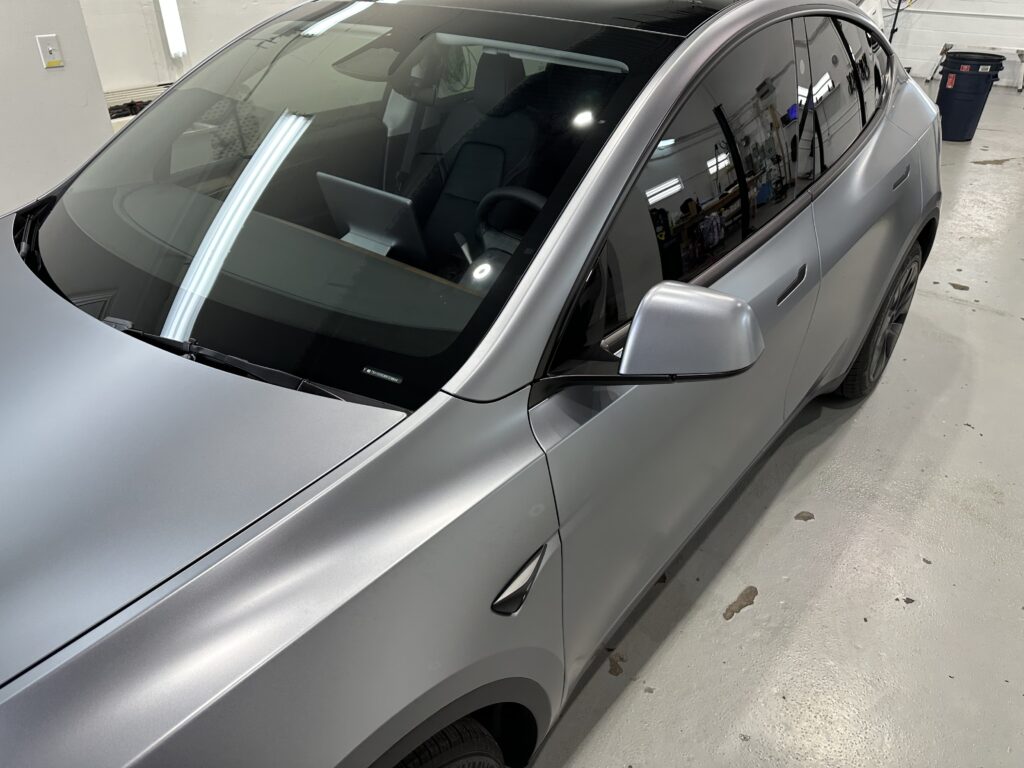
fabian

Product Insights

Windshield Protection Film: A Complete Guide

What windshield protection film does, how modern film performs, and how to tell whether your vehicle is a good fit. Written from what we install every week in Markham.

At a Glance

What it does? Absorbs chips and slows the pitting that dulls glass over time.

Why now? ADAS recalibration has made windshield replacement significantly more expensive.

What we install? ULTRAFIT WinCrest EVO, self-healing, clear, heat-gun-free installation.

Best fit? Highway kilometres and ADAS-equipped glass make the strongest case.

What Windshield Protection Film Is

Windshield protection film is an optically clear layer applied to the outside of your windshield. It works on the same principle as paint protection film: a sacrificial surface that takes impact and abrasion so the glass underneath stays clear and intact.

Unlike paint, windshield glass cannot simply be polished back to factory condition once pitting develops. Every chip, every scratch, and every tiny impact is permanent. Film gives that surface something to hide behind, and it is the only product that does.

Your windshield is one of the most exposed surfaces on the vehicle. Unlike body panels, it constantly meets airborne debris at highway speed and cannot flex or self-repair after impact. Every trip slowly changes its surface, even when you never notice it happening.

Although it works on the same sacrificial-layer principle as paint protection film, windshield protection film is engineered specifically for optical clarity and the demands of automotive glass. It is a separate service from body PPF, and it can be added to any coverage package or installed entirely on its own.

Why It Matters More Than It Used To

Two things have changed the calculation, and both point the same direction.

Replacement costs have climbed sharply

Modern windshields are thinner, more sharply curved, and increasingly carry ADAS hardware, the cameras and sensors mounted behind the glass. Modern windshields often support lane-keeping assistance, forward collision warning, rain sensors, automatic high beams, and adaptive cruise systems.

A decade ago, replacing a windshield usually meant replacing a piece of glass. Today, many vehicles require recalibration of forward-facing cameras and safety systems after replacement. Depending on the manufacturer, that additional work can significantly increase the total replacement cost, on a component that used to be a straightforward few hundred dollars.

It is the same long-term ownership question we work through in is PPF worth it in the GTA: what a repair actually costs you later, against what protection costs now.

Pitting builds quietly

Chips get noticed. Pitting does not. Thousands of impacts too small to chip the glass gradually frost the surface, and because it happens over years you adapt without registering it. Where it shows up is at night, driving into oncoming headlights, when the whole windshield hazes and scatters light. That glass is not broken, so it rarely gets replaced. It is simply permanently worse than it was.

Film addresses both. It absorbs the strikes that would chip, and it takes the constant low-level abrasion that causes pitting.

What We Install, and What It Does

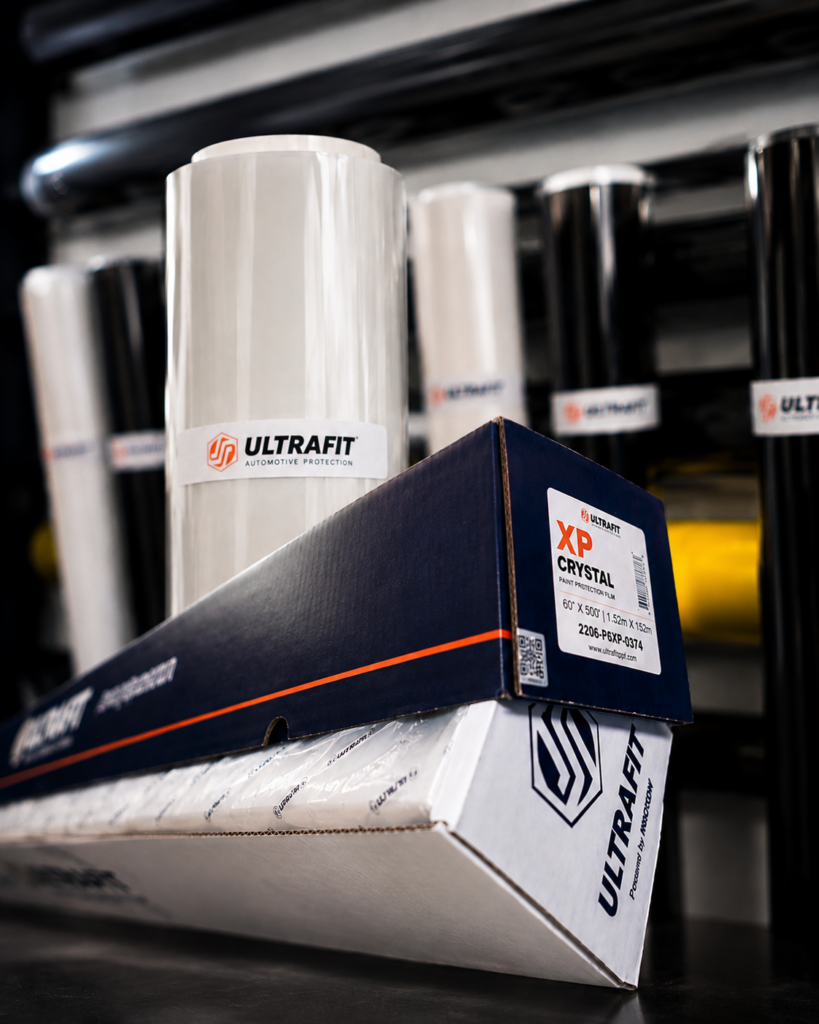
We install ULTRAFIT WinCrest EVO, part of the WinCrest series of windshield protection films.

What the film brings:

  • Self-healing topcoat. WinCrest is the first windshield film series built with paint-protection-grade self-healing. Light scratches and surface abrasion close up with heat from the sun.
  • Anti-delamination engineering. Purpose-built to stay bonded to the glass across seasons and temperature swings.
  • Heat-gun-free installation. A cleaner, more controlled process with less thermal stress on glass that has sensors mounted behind it.
  • Premium UV rejection. Protects the cabin and interior, and reduces UV exposure for whoever is behind the wheel.
  • Glare reduction. Noticeable in low winter sun and against oncoming headlights.
  • Crystal-clear clarity. No hazing or distortion from the moment of installation.
  • Removal-friendly adhesive. Comes off cleanly when the time comes, with no residue left on the glass.

The self-healing property is the one worth dwelling on. Paint protection film has had self-healing topcoats for years; bringing that same chemistry to glass is recent, and it is what keeps a windshield film looking clear rather than accumulating fine wiper marring over a season.

What Windshield Protection Film Does Not Do

Setting expectations properly is part of the job, so here is the honest boundary of what this product delivers.

Windshield film does not:

  • Make glass unbreakable. A large stone at highway speed can still crack a windshield, filmed or not.
  • Eliminate every chip. It absorbs a great deal, and it dramatically reduces the small stuff, but it is not a guarantee against all impact.
  • Repair existing damage. Film goes over healthy glass. A chip or crack that is already there needs addressing first.
  • Replace careful driving. Following distance behind gravel trucks and construction traffic still does more for your glass than any product.

What it does do is take the constant, cumulative abrasion that quietly ages a windshield, and absorb the smaller impacts that would otherwise become chips. Over the life of a vehicle, that is where the value sits.

What the Warranty Covers

WinCrest EVO carries a 6-month manufacturer warranty against peeling, fading, cracking, and delamination.

It is worth being clear about what that covers, because a windshield film warranty works differently from the 10-year warranty on our body PPF. It covers manufacturing defects, meaning the film failing when it should not.

It does not cover rock chip damage absorbed by the film, or wiper-related wear. Both of those are the film doing exactly the job you bought it for, on the most abraded surface of the vehicle. Film that has taken a hard strike has done its work, and that becomes a replacement rather than a warranty claim.

We would rather set that expectation up front than have the conversation later.

Windshield Shape and Vehicle Fit

Windshield curvature varies enormously between vehicles, and it affects both how the film forms during installation and how it performs afterwards.

Upright windshields

Jeep Wrangler, Ford Bronco, and G-Wagon-style glass sits close to vertical, so debris arrives closer to head-on rather than glancing off. These vehicles see the most benefit.

Steeply raked glass

Sports cars and modern sedans deflect more debris but present complex compound curves. The film has to form evenly so tension distributes across the glass rather than collecting at the edges.

Panoramic and EV glass

Large single-piece windshields, common on vehicles like the Model X, are among the most expensive to replace and are often sensor-dense. High replacement cost makes the strongest case.

ADAS-equipped glass

Anything with a camera housing behind the mirror needs the film positioned so it never sits in the sensor's field of view. That is planned before installation begins.

This is why we assess the specific vehicle rather than quoting from a chart. How the film forms on your glass is what determines how it looks and how long it lasts.

Ontario Driving Conditions

Southern Ontario asks a lot of a windshield. Highways here, the 401, 404, 400, 407, and DVP among them, carry significant sand, gravel, and road salt through much of the year, and winter sanding puts abrasive material directly into the traffic stream at speed.

Add repeated freeze-thaw cycling, and a windshield that already has a chip is considerably more likely to run into a crack overnight. Glass that might stay clear for years in a milder climate can show visible pitting within a couple of seasons of GTA commuting.

That is the practical case for film here: not that the glass will suddenly fail, but that it degrades faster than most drivers expect, and that degradation cannot be reversed.

Is It Right for Your Vehicle?

Windshield film makes more sense on some vehicles than others, and we would rather help you place yours accurately.

Strongest fit

ADAS-equipped vehicles, daily highway commuters, panoramic or OEM-only glass, and upright windshields on trucks and off-road SUVs. High replacement cost plus high exposure.

Worth discussing

Mixed city and highway driving, or a vehicle you plan to keep long term where pitting will accumulate over the ownership period.

Less compelling

City-driven, garage-kept vehicles that rarely see highway speeds, or inexpensive glass with no sensors behind it.

Address first

Glass that is already chipped. Film goes over healthy glass and does not repair existing damage, so a resin repair comes first.

The case strengthens as replacement cost and highway kilometres rise. We will give you a straight read on where your vehicle sits.

Living With It

Keep the glass clean and avoid aggressive wiping for the first 48 hours so the film fully sets. After that it asks very little: replace worn wiper blades promptly, since a torn blade drags its carrier across the surface, and clear ice from the glass edges with a scraper rather than working directly over the filmed area.

If you are already considering film for your paint, our paint protection film guide covers how the two services fit together, and the PPF page has an interactive coverage simulator.

Common Questions

Will windshield film stop my glass cracking?

It meaningfully reduces the risk from smaller impacts and slows pitting, which is the damage most drivers never account for. It is not armour. A large stone at highway speed can still crack glass. What it reliably does is absorb the constant low-level abrasion that degrades a windshield over years.

Will I see it, or notice any distortion?

No. Clarity was the non-negotiable requirement when we chose what to install, because a windshield is the one surface where optical compromise is unacceptable. WinCrest EVO installs crystal clear with no hazing or distortion.

Does it interfere with ADAS cameras or sensors?

Not when installed correctly. The film is positioned so it does not sit in the field of view of the sensor housing behind the mirror. That placement is planned before installation, which is one reason vehicle-specific assessment matters.

Why is the warranty six months?

Because it covers manufacturing defects such as peeling, fading, cracking, and delamination, rather than normal use. A windshield is the most abraded surface on a vehicle, and chip damage absorbed by the film or wiper wear are the film performing as intended.

Does insurance cover windshield protection film?

Usually not. Most policies treat protective film as an optional upgrade rather than a repair, so it is generally an out-of-pocket cost. What varies is glass coverage on the windshield itself, since some comprehensive policies in Ontario include glass repair or replacement with a reduced or waived deductible, which changes how the film pays for itself. Worth a call to your provider before you decide, since the answer differs by insurer and policy.

Can the film be replaced without replacing the windshield?

Yes, and that is the entire point of a sacrificial layer. When the film has taken enough damage, it comes off and a fresh piece goes on, while the glass underneath stays exactly as it was. Replacing film is a fraction of the cost of replacing an ADAS-equipped windshield, and it needs no recalibration.

Can it be removed later?

Yes. WinCrest uses a removal-friendly adhesive, so it comes off cleanly without leaving residue on the glass.

Can it go on a windshield that is already chipped?

Address the chip first. Film goes over healthy glass, and covering an existing chip makes it harder to reach with a resin repair later. Once the glass is sound, film protects it from there.

Does it help with glare and heat?

It rejects UV and reduces glare, which is noticeable in low winter sun and against oncoming headlights at night. If cabin heat is your main concern, our automotive window tint page covers ceramic films built specifically for heat rejection.

How long does installation take?

A windshield film installation is typically completed in a single visit. We confirm timing when we assess the vehicle, since windshield size and curvature affect how long the film takes to form and set.

Find out whether your windshield is worth protecting

Tell us the vehicle, how you drive it, and whether it has ADAS hardware behind the glass. We will give you a clear answer on how the replacement cost compares to the film, and what we would recommend.

Paint protection film on a vehicle front end at Evelyn Protective Films in Markham

Paint Protection Film

Is PPF Worth It in the GTA?

An honest answer, including when it is not. Written from what we see on vehicles that commute here every day.

At a Glance

Highway commuter? Usually yes, at least on the front end.

City driving, garage kept? Often not, and we will say so.

Short lease? Depends on kilometres and return standards.

The deciding factor? Highway exposure and how long you are keeping the vehicle.

The Short Answer

Most people do not start thinking about paint protection film until they see the first chip.

It usually starts small. A tiny mark on the bumper. A chip on the hood. A bit of pitting that was not there last month. Then, after a few weeks of highway driving, a rough winter, or regular commuting through the GTA, that clean front end starts to lose its edge.

So is PPF worth it in the GTA? For a vehicle that spends real time on the highway and that you plan to keep, usually yes, at least on the front end. For a garage-kept car that rarely leaves the city, often not. The honest answer depends on how you drive, where you drive, and how long you plan to keep the vehicle.

In this region those details matter more than most people expect, and that is what the rest of this guide is about.

What PPF Protects Against Here

Paint protection film is designed to take the hit before your paint does. That is the core value. It is not there to make the vehicle invincible. It is there to protect the areas that see the most abuse.

Rock chips

Constant on highway routes, thrown up by the vehicles ahead of you. The single most common reason drivers come to us, and the damage that cannot be undone.

Road debris and grit

Sand, gravel, and small impacts that slowly wear down high-impact areas. Individually harmless, cumulatively the reason a three-year-old front bumper looks tired.

Winter salt and slush

Especially hard on lower panels, bumpers, and rocker areas, where it sits rather than washing off.

Daily wear

Wash marring, parking contact, bug residue, and bird droppings. The damage that builds quietly enough that you adapt to it without noticing.

If you are wondering whether PPF is worth it in the GTA, this is where the conversation starts. How much of that wear do you want your paint to absorb, and how much would you rather the film take instead?

For broader context on how winter road salt contributes to corrosion and vehicle wear, the Canadian Automobile Association's winter driving resources are worth a read.

Why GTA Driving Is Hard on Paint

GTA driving is a little bit of everything: highways, construction zones, winter salt, parking lots, traffic, and constant road spray.

Highways like the 401, 404, 400, 407, and DVP create steady exposure to debris at speed. Construction is effectively permanent somewhere on every major route, which means loose aggregate in the traffic stream year round. Even a short commute can put the front bumper, hood, mirrors, and lower panels through a great deal over time.

Winter compounds it. Sanding puts abrasive material directly onto the road at speed, and salt collects on exactly the lower panels that are hardest to keep clean. A vehicle that would age gracefully in a milder climate can look noticeably worn after two or three seasons here.

For drivers in areas like Vaughan, Richmond Hill, North York, and Scarborough, this is not occasional exposure. It is regular driving.

What It Looks Like After It Does Its Job

This is the part most owners never see, because by the time film is removed the vehicle has usually changed hands. The damaged film first, then the paint underneath once the film comes off.

Step 1: the film took the damage

The kind of impact that would normally mark the painted surface. In this case, the damage stayed in the film.

Step 2: the paint was protected

Once the damaged film is removed, the original paint underneath is preserved. That is the value people are paying for.

Film can be removed and replaced. Original paint, once chipped through, is much harder to restore perfectly at any price.

What the Damage Actually Costs You

The question is rarely whether film is expensive. It is whether it costs less than the alternative, and that comparison gets skipped surprisingly often.

What chip damage actually leads to:

  • Touch-up that never quite matches. The cheap route, and it usually looks like the cheap route from certain angles.
  • Panel respray. Matching modern metallic and pearl finishes across a panel boundary is genuinely difficult, and a resprayed panel is a resprayed panel forever.
  • A note on the condition report. Stone chipping is one of the first things an appraiser or private buyer looks at on a front end.
  • Corrosion, eventually. A chip through to bare metal in a salt environment does not stay cosmetic indefinitely.

Against that, a front-end film package is a known, one-time figure that protects the panels where nearly all of this happens. That is the actual comparison, and for a highway commuter it is usually not close.

Protected front ends

Film on the panels that take the impact, installed at our Markham studio.

Is PPF worth it in the GTA: clear paint protection film being installed on a front end in Markham Paint protection film installation at the Evelyn Protective Films studio High gloss clear paint protection film preserving the factory finish Tesla Model Y with paint protection film applied to the front end

When PPF Is Worth It

Film tends to make the most sense when the vehicle matters to you beyond basic transportation, and when the exposure is genuinely there.

The case is strong if:

  • You drive highway routes regularly rather than occasionally
  • You plan to keep the vehicle several years or longer
  • The vehicle is premium, exotic, or expensive to repaint
  • You have owned a car long enough to know how quickly wear builds after a few seasons here
  • You care about the front end still looking right in year four

The more you care about keeping the original finish intact, the more sense film usually makes.

When It Might Not Be

Film is valuable, but it is not for everyone. These are the situations where we would suggest scaling back or waiting.

Reconsider, or scale back, if:

  • The vehicle is short-term and cosmetic wear at return is acceptable
  • You genuinely are not bothered by minor chipping
  • You rarely drive highways or high-traffic routes
  • The paint is already failing, in which case bodywork comes first
  • Your budget only covers full coverage in low-tier film, where a smaller package in quality film is the better buy

This is where honest guidance matters. The right answer is not always the biggest package. The right answer is the coverage that fits how the vehicle is actually used.

What Coverage Makes Sense

Most people do not need full coverage straight away. The right package depends on the vehicle, driving habits, and how long you plan to keep it.

Partial Plus

Full hood, partial fenders, full front bumper, mirror faces, and headlights. A practical starting point for front-end protection.

Full Frontal

Full hood, full fenders, front bumper, mirror faces, and headlights. Well suited to GTA drivers who want meaningful front-end protection.

Full Frontal with commuter add-ons

A front package extended with rocker panels and A-pillars, which are the next areas to suffer on a vehicle covering serious highway kilometres.

Total Coverage

Every exterior painted panel. Best for long-term ownership, premium vehicles, and full-body preservation.

Lease Versus Ownership

Yes, it changes the decision, because the goal changes with how long the vehicle will be with you.

On a lease, the question is narrower: will chip damage cost you at return? A front-end package can help avoid exactly the kind of stone chipping that gets noted on a return inspection. Whether it pays depends on your term length, annual kilometres, and how exposed the vehicle actually is. On a short, low-kilometre lease, often it does not.

On a vehicle you are keeping, film becomes about long-term preservation rather than a single event. You are protecting the finish across years of accumulated wear, and the numbers improve the longer you hold the car.

There is a third case worth naming: a vehicle you intend to sell privately in a few years. Original, unchipped paint is one of the clearer signals to a private buyer that a car has been looked after, and it removes an obvious point to negotiate against.

Common Questions

Is PPF worth it in the GTA for daily driving?

For a lot of drivers here, yes. Not because it is flashy, but because it solves a real problem. Paint wear accumulates faster in this region than most people expect, and the front end takes nearly all of it. If you notice chips and small imperfections and they bother you, film is usually worth considering. If you are relaxed about cosmetic wear, you may not feel the same value.

Do I need to cover the whole car?

Rarely. Damage is not evenly distributed, and the front end typically takes far more impact than the rear. Most drivers get the majority of the benefit from a front-end package. Total coverage makes sense on premium vehicles and long ownership horizons rather than as a default.

Is it worth it on a used car?

It depends entirely on the paint's condition. Film goes over healthy paint and does not repair what is already there, so existing chips stay underneath. On a well-kept used vehicle you plan to keep, it makes good sense. On one with failing clearcoat, address that first.

Will PPF pay for itself at resale?

Treat that as a bonus rather than the reason. Film does not guarantee a higher sale figure. What it does is remove a visible reason for a buyer to negotiate down, and reduce cosmetic repair before listing. The stronger argument is simply that you get to enjoy a clean vehicle for the years you own it.

Should I get film or a ceramic coating first?

If highway kilometres are the issue, film first, on the front end, because chips are the damage you cannot undo. A coating adds gloss and easier washing but will not stop a stone. Our comparison of PPF versus ceramic coating covers the trade-off properly.

How long does PPF last?

Premium self-healing film typically performs for seven to ten years or more. Warranty terms depend on the film selected, ranging from a 10-year manufacturer warranty to a limited lifetime warranty. Lifespan depends on film quality, sun exposure, and how the vehicle is washed and stored, and we confirm the exact terms for your film at booking.

Does the installer matter as much as the film?

In our experience, more. A large share of the complaints we hear about PPF turn out to be installation problems rather than material problems. Our guide on choosing a PPF installer covers what to ask any shop, including ours.

Thinking about PPF for your vehicle?

If you are comparing packages, pricing, or trying to work out what makes sense for how you actually drive, reach out. We will walk you through the options clearly, without pressure, including telling you when a smaller package is the better call.

Coloured paint protection film installed on a vehicle at the Evelyn Protective Films studio in Markham

Home  /  Paint Protection Film  /  Coloured PPF

Coloured PPF Markham

Colour Change With Real Paint Protection

Coloured PPF gives you a full colour change and genuine paint protection in a single film. Not a wrap with film over it. One layer that does both jobs.

Backed by a manufacturer warranty of up to 15 years depending on the film selected, and fully reversible on healthy factory paint. Installed by appointment at our Markham studio, serving the surrounding GTA.

What It Is

Protective Film, With the Colour Built In

For years, drivers had to choose between changing how a vehicle looked and protecting it. Vinyl wrap changed the colour but offered little impact resistance. Clear paint protection film protected the paint but kept the factory colour. Coloured PPF combines those two previously separate products into one.

It is the same category of product as clear film, with pigment built into it. A high-performance self-healing polyurethane engineered to absorb road debris, resist UV, and take daily wear before any of it reaches your paint. The difference is that it also changes what the car looks like.

This is the part worth being clear about: you are not trading protection for appearance. Coloured PPF is protective film first. The colour is an added property rather than a substitute for the performance.

If protection alone is the goal, our clear paint protection film service covers coverage packages and film options.

At a Glance

Coloured PPF, in Short

What It Is

Paint protection film with colour built into it. Same impact absorption and self-healing as clear film.

Warranty

Up to 15 years depending on the film selected, against manufacturing defects such as yellowing, cracking, and delamination.

Versus a Wrap

Thicker, tougher, longer lasting, and a higher investment.

Reversible

Yes, on healthy factory paint, removed within the film's service life.

Finishes Available

Coloured PPF Finishes, From Subtle to Statement

Coloured PPF covers considerably more ground than a single block colour. The range is what makes it interesting, and it is why we review samples on your actual paint before committing to anything.

Solid Colour

A straightforward colour change in gloss or satin. Clean, deliberate, and the easiest to visualize before installation.

Colour Shift

Finishes that change hue with viewing angle and light. Dramatic in person and effectively impossible to photograph accurately, which is why samples matter.

Stealth & Matte

Converts gloss paint to a satin or matte finish while protecting it. Also the correct solution for protecting factory matte paint without changing its character.

Accent Finishes

Carbon-style, forged, and textured films, almost always used on individual elements rather than full vehicles. Roofs, mirror caps, and spoilers are the common ones.

Not every finish suits every vehicle. We will talk through what is realistic for your panels, your daily use, and your long-term plans before recommending one.

Recent Work

Coloured PPF We Have Installed

Colour change and impact protection in the same layer, installed at our Markham studio.

Why People Choose It

One Film Doing Two Jobs

Every layer you add is another set of edges that can lift and another interface that can fail. Doing both jobs in a single film is structurally simpler, and usually less expensive than doing them separately.

Protection

Real Impact Absorption

Absorbs rock chips, road debris, bug splatter, light scratching, and UV exposure before any of it reaches your paint.

Self-Healing

Light Marks Recover

Light swirls and surface marks relax with heat from the sun, so the finish holds its appearance with less effort.

Reversible

Factory Paint Preserved

An entirely different visual identity for the vehicle, with the original paint intact underneath for resale or lease return.

Durability

Built to Be Driven

Substantially tougher than vinyl, and engineered for vehicles that cover real kilometres rather than sitting on display.

Warranty

Up to 15 Years

Manufacturer warranty coverage of up to 15 years depending on the film selected, against defects such as yellowing, cracking, and delamination.

Simplicity

One Layer, Not Two

No wrapping and then filming over it. One product, one installation, one set of edges to maintain.

Honest Comparison

Coloured PPF Versus Vinyl Wrap

The most common question we get. Both change how a vehicle looks, but they are built for different priorities.

Appearance-Driven

Vinyl Wrap

Thinner and more affordable, with the widest range of finishes. It does not absorb impact.

  • Primary PurposeVisual customization, branding, and reversible colour changes
  • Film ThicknessThinner film, usually around 3 mil depending on product
  • Typical Lifespan3 to 5 years with proper care
  • ProtectionLight surface coverage only
  • Self-HealingNo
  • InvestmentMore accessible price point
Protection-Driven

Coloured PPF

Roughly two to three times the thickness, self-healing, and chosen for impact absorption as well as colour.

  • Primary PurposePaint protection with a colour change built into the film
  • Film ThicknessThicker self-healing film, typically 8 to 10 mil depending on product
  • Typical Lifespan7 to 10+ years, with warranty coverage up to 15 years on some films
  • ProtectionAbsorbs rock chips, debris, and minor scratches like clear PPF
  • Self-HealingYes, on light scratches and swirl marks
  • InvestmentHigher investment, with protection value built in

A stone at highway speed goes straight through vinyl to the paint underneath, and you will not see the damage until the wrap comes off. That single difference is what most of the decision comes down to.

Read the Full Comparison →

Financing is available. Split your coloured PPF project into manageable payments, and ask us for details with your quote.

See It on a Vehicle

Torque Blue on a Tesla Model Y

Colour shift and satin finishes are difficult to judge from photographs, because the whole point is that they behave differently as light and angle change. Video gets closer.

Samples in person are still better than any screen, which is why we keep them on hand.

What It Costs

Where Coloured Film Sits Against the Alternatives

We quote your specific vehicle rather than guess, but it helps to understand the shape of the decision before you ask.

Versus Vinyl Wrap

Coloured PPF costs more. You are paying for protective film rather than pigmented vinyl. If appearance is the only goal and the vehicle sees little highway use, wrap remains the better value.

Versus Wrap Plus Clear PPF

Coloured film is usually less expensive than wrapping a vehicle and then filming over it, and it avoids the layering complexity entirely. This is where it makes the most obvious sense.

Versus a Respray

Comparable in some cases, but reversible where paint is not. Your factory colour and its documentation stay intact, which matters at resale.

Versus Clear PPF

Coloured film costs more than clear film of the same coverage. You are buying appearance as well as protection.

Living With It

Care and Reversibility

Wait roughly 72 hours after installation before the first wash so the edges fully set. After that, remove bird droppings, sap, and bug residue promptly rather than letting them sit, wash when panels are cool, and avoid brush automatic washes.

Matte and satin finishes need more care than gloss, because the texture is a physical property of the surface. No wax, no polish, and no all-in-one products, since anything that fills the texture creates a shiny patch that cannot be corrected. Use products labelled for matte film.

A ceramic coating formulated for film surfaces can be added if easier washing, gloss, and chemical resistance are also priorities.

Removal Comes Off Clean

Coloured PPF installed on healthy factory paint and removed by an experienced installer within its service life comes off cleanly, leaving the original colour as it was.

Two Things Affect That

The paint underneath has to have been sound when the film went on, which is why we inspect before quoting. And the film should not be left on far past its service life, since aged film and aged adhesive make removal harder.

Plan the Exit

If you know the vehicle is heading to sale or lease return, plan removal around that date rather than waiting for the film to tell you it is time.

Fit Check

Is Coloured PPF Right for Your Vehicle?

It is a strong product, and it is not the right answer for every situation. Here is how we think about the fit.

Strong Fit

Driven and Distinctive

Drivers who want a distinctive finish on a vehicle they actually drive, and who care about preserving the original paint for resale or lease return.

Also Consider

A Colour You Never Loved

A car in otherwise excellent condition in a colour that was never the plan. Changing the finish is far less drastic than a respray and fully reversible.

Wrap May Suit

Cosmetic and Short-Term

Purely cosmetic goals on a garage-kept vehicle with low highway exposure, or a look you expect to change again within a couple of years.

Address First

Paint That Needs Work

Paint that is failing, deeply scratched, or recently resprayed. Film goes over healthy paint, and fresh paint needs to cure fully before anything is applied.

If protection rather than appearance is your priority, our paint protection film guide covers clear film and coverage packages, and is PPF worth it in the GTA looks at whether film earns its cost for how you drive.

Where We Are

Coloured PPF in Markham & the GTA

Our studio is at 6 Heritage Rd, Unit 3 in Markham, just north of Highway 7 near McCowan. Coloured PPF is installed by appointment only, one vehicle at a time, with samples reviewed on your paint before anything is ordered.

We work with drivers from Markham, Richmond Hill, Vaughan, Stouffville, North York, Scarborough, Toronto, and across the surrounding GTA.

Paint Protection Film by Area

PPF in Richmond Hill · PPF in Vaughan · PPF in North York · PPF in Scarborough

(905) 201-9938

Studio Address

6 Heritage Rd, Unit 3
Markham, ON L3P 1M4

Monday to Friday, 8:30 AM to 5:00 PM

By appointment only

Free on-site parking

Open in Maps

FAQ

Common Coloured PPF Questions

Answers to the questions we hear most before booking.

Does coloured PPF protect as well as clear PPF?+

Yes. It is the same category of protective film with pigment built in, so it absorbs impact, self-heals light scratches, and resists UV the same way clear film does. You are adding appearance, not trading away protection.

How long does coloured PPF last?+

Considerably longer than vinyl wrap, since it is a protective film rather than a cosmetic one. Coloured PPF is backed by a manufacturer warranty of up to 15 years depending on the film selected, against manufacturing defects such as yellowing, cracking, and delamination. Actual service life depends on the finish, how the vehicle is driven and stored, and how it is maintained. We confirm the exact terms for your film at booking.

Will it damage my paint when removed?+

Not when it was installed on healthy factory paint and is removed by an experienced installer within its service life. The risks are paint that was already compromised, or film left on far past its lifespan. That is why we inspect paint before quoting.

Does coloured PPF fade?+

Premium coloured films are built with UV stabilizers specifically to hold their colour, and they resist fading far better than the pigmented films of a decade ago. That said, no pigmented material is permanently immune to sustained sun exposure. Horizontal panels such as the roof, hood, and trunk lid see the most UV and will show change first if it happens at all. Shaded or garaged parking slows it, and the quality tier of the film makes a substantial difference. We will set a realistic expectation for the specific finish you choose, since some colours and effects are inherently more stable than others.

Can I do part of the car rather than all of it?+

Yes, and it is a common approach. Roofs, mirror caps, spoilers, and accent panels are frequently done on their own, either as a contrast against factory paint or as a way to test a finish before committing to a full vehicle.

Can I put a ceramic coating over coloured PPF?+

Yes. A coating formulated for film surfaces adds gloss on gloss finishes, improves hydrophobics, and makes washing gentler. Coating over film is a different job from coating bare paint, so the product matters.

How do I choose a coloured PPF finish?+

In person, by appointment. Colour shift and satin finishes look substantially different on a screen than on your actual paint, under real light, on your vehicle's specific body shape. Book a consultation and we will have samples out and review panel placement with you before anything is ordered.

Is the warranty transferable if I sell the vehicle?+

It depends on the film. Some manufacturer warranties are non-transferable and valid only to the original purchaser, while others allow transfer under certain conditions. If resale is part of your thinking, tell us at consultation and we will factor it into the film recommendation.

Do I need to tell my insurer?+

Worth checking. A colour change can affect how a vehicle is described on a policy or registration, and requirements vary. It is a quick call to make before installation rather than a question to discover afterwards.

Book an Appointment to See the Finishes in Person

Colour shift and satin films have to be seen on real paint under real light. Book an appointment at our Markham studio to look through the options and get a recommendation tailored to your vehicle, your goals, and your budget. Consultations are by appointment so we can give you our full attention.

Paint Protection Film

How to Choose a PPF Installer

Film brand is the easiest thing to compare and the least likely to decide your outcome. Here is what actually separates an install that ages well from one that does not.

At a Glance

What matters most? Installation quality, not film brand.

What to ask about? The service warranty, meaning labour, not just the film.

What to look at? Close-up edges, not glossy hero shots.

Biggest red flag? A shop that talks about film brand and not about process.

Material Versus Installation

If you are trying to choose a PPF installer, start here: paint protection film materials today are generally very good. Across the premium tier, the differences between films are real but modest, and they are not what most owners end up unhappy about.

In real ownership, outcomes are shaped far more by surface preparation, installation discipline, and post-install support than by which film went on the car. A premium film applied with inconsistent process can fail early. A quality film installed with care can look exceptional for years.

Choosing the installer first and the material second is usually the safer decision. It is also the harder one, because film brands are easy to compare on a website and installation quality is not.

That is the real problem this guide is trying to solve. Everything below is about how to assess the thing that actually matters, using evidence you can see before you book.

What Poor Installs Look Like Years Later

These are photographs of paint protection film that did not age well. None of them are our work. They came into our studio for removal or correction, and they are the clearest argument we can make about why installation matters.

Examples of poorly aged PPF

Every one of these vehicles arrived for correction or removal. None of them were installed by us.

Poorly aged paint protection film showing why it pays to choose a PPF installer carefully Lifting edge on aged paint protection film Discolouration and staining visible on old paint protection film Poor edge finishing on a paint protection film installation Contamination trapped beneath paint protection film Paint protection film failing at a panel edge Aged paint protection film requiring removal and replacement

The patterns repeat, and they are worth knowing by name, because they are what you are looking for when you inspect a shop's own work.

What tends to go wrong:

  • Lifting edges. Film pulling back from a panel edge, usually because it was not properly wrapped or the surface underneath was not prepped.
  • Trapped contamination. Specks and fibres sealed under the film, a direct consequence of the environment the work was done in.
  • Visible cut lines. Film trimmed on the panel rather than wrapped around it, leaving a hard edge that collects dirt and eventually lifts.
  • Discolouration and staining. Sometimes the film itself, often contamination that got underneath and stayed there.
  • Silvering. Tiny trapped air channels that appear as a faint silver or cloudy sheen, usually along edges or over textured areas. Common, very visible in sunlight, and almost always a preparation or technique issue.
  • Poor removal outcomes. The one nobody sees until years later. Film installed on unhealthy paint, or left far past its service life, can take paint with it.

Over the years we have removed and replaced film from vehicles carrying every major premium brand. The common thread was rarely the material. More often it was rushed preparation, inconsistent installation, or a lack of support after the vehicle left the shop. That is one of the reasons we believe choosing the right installer matters more than choosing between two premium films.

Service Warranty Versus Manufacturer Warranty

Warranties are the most misunderstood part of this decision, and the confusion works in favour of shops that would rather not be held to anything.

Manufacturer warranty

Covers defects in the film itself, typically yellowing, cracking, peeling, blistering, and delamination. It comes from the film maker, runs for years, and says nothing whatsoever about the quality of the installation.

Service warranty

Comes from the installer and covers workmanship. Lifting, edge failure, and installation faults. It is shorter, it is the one that actually reflects accountability, and plenty of shops do not offer one.

A shop offering only a manufacturer warranty may indicate it relies primarily on the manufacturer's coverage rather than offering its own workmanship protection. That is worth asking about directly, since some very good installers simply have never formalised one in writing.

Clarify before booking:

  • What aspects of the installation are supported after delivery?
  • Is labour included if refinements are required, or only material?
  • How are post-install adjustments handled, and how quickly?
  • How long does the installer stand behind their own work?
  • What maintenance is required on your side to keep coverage valid?

Ask whether the shop stands behind both the product and the installation. A good manufacturer warranty matters, but so does knowing the installer will be there if you ever need them.

Why the Workspace Matters

Paint protection film installation depends on a controlled environment more than most people realise. Airborne dust becomes permanent contamination the moment film goes down over it. Temperature affects how film forms and how adhesive behaves.

A clean, organised studio with proper heating and cooling lets the work be carried out consistently without fighting environmental variables. It is not a luxury detail. It is a direct input to the finished result.

A well-kept space also tells you something about the mindset of the installer. When the environment is orderly, the process usually is too, and that care tends to carry through to the vehicle. A clean studio does not guarantee a great installer, but a neglected workspace rarely produces meticulous work. If you are shortlisting shops, ask to see where the work actually happens.

What to Look For

Evidence of detail work

Look past the glossy hero shot. Ask for close-ups of edge finishing, transitions, and complex areas like mirror caps, bumper vents, and door handle recesses. Those details determine how an install ages.

Process discipline

Consistent outcomes come from consistent process. Clean preparation, controlled installs, and patience matter far more than turnaround speed. A shop that promises a same-day full front is telling on itself.

Clear communication

A strong installer explains options, limitations, and expectations plainly, including what the film will not do. Transparency early prevents disappointment later.

Willingness to say no

A shop that inspects your paint and tells you it needs correcting first, or that a smaller package suits your driving better, is a shop worth trusting with the larger job.

Questions to Ask Before Booking

These help you choose a PPF installer on process, accountability, and support rather than on marketing.

  • Who installs the film day to day? Consistency matters, and you want to know whether the person you are speaking to is the person doing the work.
  • How are edges and high-impact areas finished? Ask about approach, not buzzwords. Wrapped edges and trimmed edges age very differently.
  • Is any disassembly involved? Removing badges, trim, or lights allows cleaner edge work. Whether a shop does it tells you a lot.
  • What does surface preparation involve? Prep quality determines both adhesion and how the finish looks underneath.
  • What happens if my paint is not in good condition? The answer should be an inspection, not a reassurance.
  • What does your service warranty cover? Clarify labour support and refinements specifically.
  • How long will you have my vehicle? Rushed work is visible work.
  • Can I see a vehicle you installed more than two years ago? Fresh work photographs well. Film that has been through two winters is the real test, and it is difficult to fake.
  • What should I expect in the first few weeks? Settling, curing, and aftercare should be explained without you asking twice.

What Price Is Telling You

Quotes for the same coverage can vary widely, and the spread itself is informative if you know what drives it.

Paint protection film is expensive material and slow, skilled labour. A quote well below the rest of your shortlist is not a bargain that others missed. It often reflects a lower tier of film, less disassembly, faster turnaround, edges trimmed rather than wrapped, or no service warranty. Sometimes several of those at once.

The reverse is also worth testing. A high quote should come with an explanation of what the extra buys, whether that is more panel removal, a higher film tier, or longer time in the bay. If a shop cannot articulate where the money goes, that is its own answer.

The useful comparison is never price alone. It is price against coverage, film tier, disassembly, time, and what happens afterwards if something needs attention.

Red Flags

  • Vague or impressive-sounding warranty language with no specifics on labour
  • Heavy emphasis on film brand with little discussion of process
  • Extreme pricing gaps with no explanation of what differs
  • Pressure to commit quickly, or a discount that expires today
  • Portfolios with no close-up workmanship detail
  • Reluctance to show you the workspace
  • Every vehicle quoted at the same figure without seeing its condition
  • No paint inspection before quoting

Recommended Next Steps

Taking the time to choose a PPF installer carefully is usually the difference between short-term satisfaction and long-term confidence.

  • Shortlist two or three installers rather than collecting quotes from everyone.
  • Ask detailed service warranty questions and compare the answers, not the marketing.
  • Review close-up examples of completed work, especially edges and complex panels.
  • Read recent reviews for each shop. Ours are here, and you should look at everyone else's the same way.
  • Choose the shop with the clearest process and accountability, not the lowest number.

Common Questions

Is the film brand the most important part of PPF?

Film quality matters, and there is a genuine difference between premium and entry-level material. But among quality films, installation and service warranty have a far greater impact on long-term satisfaction. Most complaints we see about PPF are installation problems, not material problems.

What is the difference between a manufacturer warranty and a service warranty?

A manufacturer warranty covers defects in the film, such as yellowing, cracking, or delamination, and comes from the film maker. A service warranty comes from the installer and covers workmanship, such as lifting or edge failure. They cover completely different risks, and you want both.

How do I choose a PPF installer if I cannot judge the work myself?

Ask for close-up photographs of edges, transitions, and complex areas on recent work, and ask to see the workspace. Those two things tell you more than any brochure. A shop confident in its work will not hesitate on either.

How long should a PPF installer have my vehicle?

Most full frontal installations take two to three days. Total coverage typically runs five to seven days depending on the vehicle, the panels involved, and how much disassembly is required. Smaller add-ons can often be done in a day. A shop promising a full front in an afternoon is telling you something about how the work will be done, since prep, panel removal, and careful edge work simply take time.

Should I choose the cheapest quote?

Rarely. A quote well below the others usually reflects a lower film tier, less disassembly, faster turnaround, trimmed rather than wrapped edges, or no service warranty. Ask what differs rather than assuming you found a bargain.

Does PPF help with resale value?

Vehicles with clean, undamaged paint present better and are easier to sell. Film does not guarantee a higher figure, but it removes a reason for a buyer to negotiate down and reduces cosmetic repair before listing. That holds only if it was installed and maintained properly.

What if my paint is not in perfect condition?

That is a conversation to have before booking, not after. Failing clearcoat, deep scratches, or rust affect both install quality and the safety of future removal, and fresh repaints need to cure fully first. Any competent shop inspects paint before quoting.

Want a clear recommendation for your vehicle?

Share your vehicle details and how you plan to use it. You will get a straightforward coverage recommendation, realistic expectations, and an honest answer if a smaller package suits you better.

Vinyl Wrap vs PPF

Vinyl Wrap vs PPF: Which Is Right for Your Car?

The vinyl wrap vs PPF decision comes down to one question: are you changing how the car looks, or protecting it? The difference between the two films is bigger than most people expect. Here are eight insights to settle it before you book.

The Short Answer

Vinyl wrap is an appearance product: colour change, styling, branding. Thin, affordable, and replaceable.

Paint protection film is a protection product: a thick, self-healing layer that absorbs rock chips and road wear. If you want both jobs in one film, coloured PPF exists for exactly that.

1. They Are Built for Different Jobs

A vinyl wrap is pigmented film engineered for appearance. Colour changes, satin and gloss finishes, accents, and commercial branding. It transforms how a vehicle looks, and it does that job brilliantly.

Paint protection film is clear polyurethane engineered to take damage so the paint does not. Stone chips, road debris, winter sand, parking wear. It is measured by what it absorbs, not how it looks, because when it is doing its job you should not see it at all.

Most disappointment in this decision comes from buying one film and expecting the other film's job. A wrap will not protect a front end from highway gravel, and clear PPF will not change your colour.

2. Thickness Is the Tell

Put the two films side by side and the difference is obvious before either touches a car. Vinyl wrap film typically runs around 3 to 4 mils thick. Paint protection film runs roughly 8 to 10 mils, two to three times the material, and that material is polyurethane built to deform and recover rather than simply hold colour.

That gap is the entire protection story. A stone that bounces off PPF leaves a mark in vinyl and often a chip in the paint underneath it.

3. Only One of Them Self-Heals

Quality PPF has a self-healing top coat: light swirls and wash marring disappear with heat from the sun or warm water. The film keeps looking new because minor damage literally vanishes from it.

Vinyl has no equivalent. Scratches in a wrap stay, and the fix is replacing the panel's film. It is not a flaw in vinyl, it is simply not what vinyl is for.

4. Wrap Wins on Styling Range

Where vinyl is untouchable is choice. Hundreds of colours and finishes: gloss, satin, matte, metallic, colour shift, chrome and textured options, printed graphics. If the goal is a specific look, vinyl's catalogue is far deeper than any protective film's.

Coloured PPF has narrowed this gap with a growing range of solid, satin, and colour-shift finishes, but if you want something genuinely wild, wrap is still the styling tool. Our vinyl wrap page covers what is possible.

5. Lifespan Is Not Close

A professionally installed wrap on a daily driver typically serves around 3 to 5 years before edges, high-wear zones, and sun exposure start telling on it. Garage-kept show vehicles do better; sun-baked commuters do worse.

Premium paint protection film is warrantied and built for roughly double that service life, with the specific term depending on the film selected. On lifespan per dollar, protective film is the long-game product.

6. Cost, and What You Are Actually Paying For

A full colour-change wrap and full-body PPF can land in similar territory, which confuses people, because the numbers hide different value. With a wrap you are paying mostly for installation labour on an appearance product. With PPF you are paying for substantially more material engineered to be sacrificial, plus the labour to fit it invisibly.

Partial coverage changes the maths: front-end PPF packages protect the highest-risk panels at a fraction of full-body cost, which is why they are the volume choice for commuters. Whether that spend makes sense for your situation is exactly what our guide on whether PPF is worth it in the GTA works through.

7. Both Come Off, Differently

Both films are removable from healthy factory paint by a professional, and both protect resale value in the sense that the original finish is preserved underneath.

The practical difference is age. Vinyl removed within its service window comes off cleanly; vinyl left years past it can become brittle and slow to strip. PPF is engineered for clean removal across its longer life. Either way, removal on repainted or compromised paint needs an honest assessment first, which is a conversation to have before installation, not after.

8. Sometimes the Answer Is Both

The decision is not always either-or. Common combinations we install:

  • Wrap the car, film the impact zones. Colour change everywhere, PPF over the wrap on the front end so gravel does not ruin the new look.
  • Coloured PPF instead of both. One film that changes the colour and protects, thicker and longer-lived than vinyl. Our coloured PPF page covers the finishes.
  • Clear PPF now, wrap later. Protect the paint from day one, and any future colour change goes over an undamaged base.

How to Decide

Choose vinyl wrap if

The mission is appearance: a colour you cannot get from the factory, satin or texture, accents, or commercial branding, and you accept that protection is not part of the deal.

Choose PPF if

The mission is keeping the paint you have: highway commuting, winter driving, premium factory finishes, long-term ownership, resale protection.

Choose coloured PPF if

You want the colour change and refuse to give up the protection, and the finish you want exists in the coloured film range.

Combine them if

The build calls for it. Wrap plus PPF on impact zones is a proven pairing, and we will tell you honestly when it is worth it.

Common Questions

What is the difference between vinyl wrap and PPF?

Vinyl wrap is a thin pigmented film made to change a vehicle's appearance. PPF is a much thicker clear polyurethane film made to absorb rock chips and road damage, usually with a self-healing surface. Wrap is styling; PPF is protection. Coloured PPF is the one product that does both.

Does a vinyl wrap protect paint at all?

Marginally. It shields paint from UV and light contact while it is on, but it is not impact protection. A stone that PPF would absorb will typically damage vinyl and can still chip the paint under it.

Which lasts longer, wrap or PPF?

PPF, and it is not close. Wraps on daily drivers typically serve around 3 to 5 years; premium protective films are warrantied and built for roughly twice that, with the exact term depending on the film selected.

Can you put PPF over a vinyl wrap?

Yes, and on colour-changed vehicles that see real driving it is a smart pairing: film over the wrap on the front end protects the investment in the wrap itself. Fitment gets assessed per vehicle, since film edges and wrap edges need to cooperate.

Is coloured PPF better than a wrap?

For a driver who wants colour change plus genuine protection and plans to keep the car, usually yes. For maximum styling range or budget-led projects, a wrap still makes sense. It comes down to which job matters more, which is exactly the conversation to have at consultation.

Still weighing wrap against film?

Tell us the look you want and how the car gets driven. We will lay out the wrap, PPF, and coloured PPF options honestly, including the combinations, so you choose once and choose right.

Comparison Guide

PPF vs Ceramic Coating: Which One Your Car Actually Needs

A PPF vs ceramic coating comparison that does not pretend they compete. They solve different problems, and knowing which problem you have is the whole decision.

At a Glance

Drive highways daily? Paint protection film.

Want gloss and easy washing? Ceramic coating.

Want the strongest result? Both, layered. Film on the impact zone, coating over the top.

Short low-kilometre lease? Possibly neither.

The Short Answer

If you want to stop rock chips, you need paint protection film. If you want gloss, easier washing, and chemical resistance, you want a ceramic coating. If you want both, you install film on the panels that take impact and coat over the top.

The single most important fact in any PPF vs ceramic coating comparison: a ceramic coating will not stop a stone chip. It is measured in micrometres. No liquid coating, at any price or tier, absorbs physical impact. Claims that a ceramic coating prevents rock chips usually stem from marketing language rather than real-world impact protection.

Where the confusion comes from

Most of it traces back to one number: 9H hardness. That rating comes from a pencil hardness test, which measures resistance to scratching from a graphite point under controlled conditions. It says nothing about resistance to rocks or road debris. A ceramic coating genuinely outperforms wax against light wash marring and swirl marks, and 9H is a fair way to express that. What it cannot do is absorb the force of a stone travelling at highway speed. Two different kinds of hardness, one shared number.

That one distinction resolves most of the confusion. Everything below is detail on top of it.

What Each Product Actually Is

Paint protection film

PPF is a transparent thermoplastic urethane film that acts as a physical barrier over your paint, typically around 8 mil thick and bonded directly to your painted panels. It is a sacrificial layer: it takes damage so the factory paint underneath does not. When it has absorbed enough abuse, you replace the film and the paint beneath is untouched. Premium film is self-healing, meaning the topcoat reflows and closes light scratches and wash marring with heat from the sun.

Ceramic coating

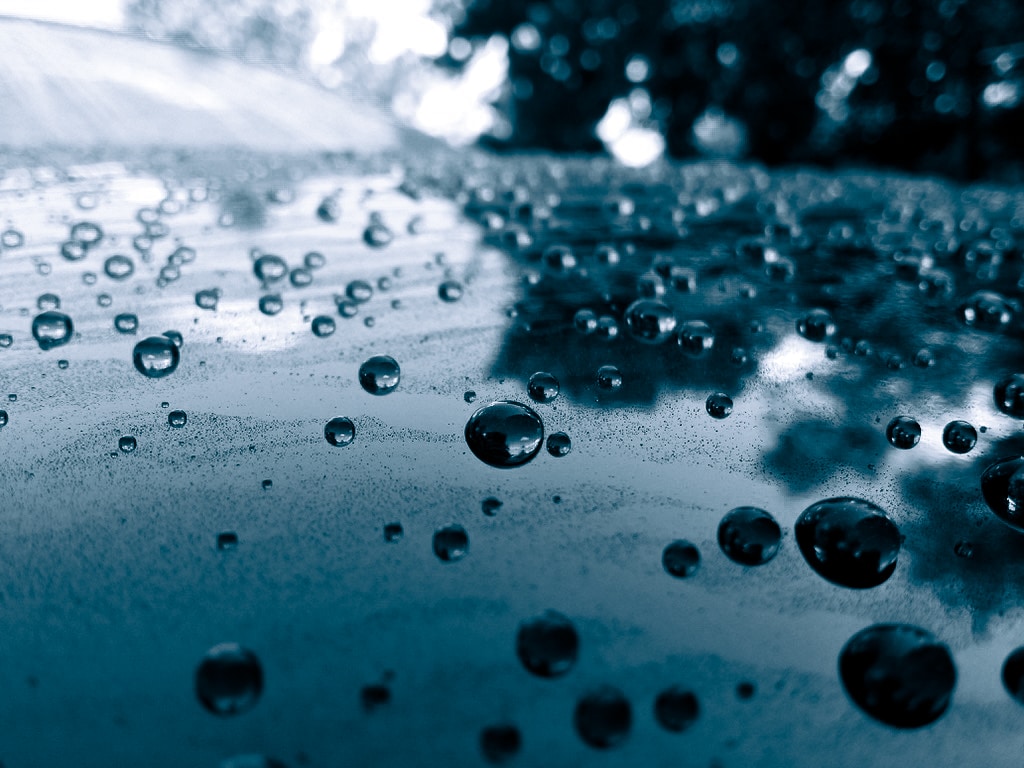
A ceramic coating is a liquid formula that chemically bonds to the surface and cures into a hard, transparent, hydrophobic layer. It is measured in micrometres rather than mils. It raises gloss, makes contaminants far less likely to stick, resists chemical etching from things like bird droppings and road salt, and makes the vehicle dramatically easier to wash. It does not add meaningful physical thickness, so it does not absorb impact.

Two different materials solving two different problems. The comparison below is not about which is better, because that question does not have an answer.

 Paint Protection FilmCeramic Coating
Primary jobImpact protectionGloss and chemical resistance
ThicknessAbout 8 milA few micrometres
Stops rock chipsYesNo
Self-healingYes, on light scratchesNo
Lifespan7 to 10+ years, 10-year warranty2, 4 or 6 years by tier
Effect on appearanceInvisible, or a deliberate finish changeDeeper gloss and reflection
Ease of cleaningGoodBest in class
InvestmentHigher upfrontMore accessible

PPF vs Ceramic Coating: Six Differences That Matter

1. What they protect against

Southern Ontario highways carry significant sand, gravel, and road salt through much of the year, which makes the front of a daily-driven vehicle especially vulnerable. PPF defends against exactly that physical damage: rock chips, road debris, light scratches, and abrasion. Ceramic defends against chemical and environmental damage: etching, staining, contamination, and UV. Both help with UV exposure, but only film handles impact.

2. Thickness

Film is roughly 8 mil. Coating is a few micrometres. That difference is not a detail, it is the entire reason one absorbs a stone strike and the other does not.

3. Lifespan

Premium PPF carries a 10-year manufacturer warranty against yellowing, cracking, peeling, blistering, and delamination, and typically performs for 7 to 10 years or more. Ceramic longevity depends on the tier: our automotive coatings run 2 years at the Select tier, 4 at Elite, and 6 at Signature. Both are multi-year products. Neither is permanent.

4. Appearance

Clear PPF is designed to be invisible, preserving the factory finish exactly. It can also deliberately change the look if you want it to, through stealth matte or coloured film. Ceramic amplifies what is already there, adding depth and a sharper reflection. If your goal is purely visual impact per dollar, ceramic wins that narrow contest.

5. Maintenance

Ceramic is the clear winner on ease of cleaning. Water sheets off, dirt struggles to bond, and wash time drops noticeably. PPF has a hydrophobic topcoat too, but a coating on top of film is what actually delivers the low-maintenance experience most people are imagining.

6. Cost

PPF is the larger investment because the material is expensive and the installation is slow, skilled work. Ceramic is more accessible, with published tier pricing on our automotive ceramic coating page. The honest way to compare is not sticker price but cost against what each one prevents. Film prevents chip repair and paint respray. Coating prevents etching and saves you time. Neither product guarantees a higher resale figure, but preserving original paint makes a vehicle more attractive to future buyers and reduces the need for cosmetic paint repair before sale.

Both, on real vehicles

Film on the panels that take impact, coating over the top for gloss and easier upkeep.

PPF vs ceramic coating comparison: paint protection film installation at the Markham studio Ceramic coating applied for gloss and easier maintenance High gloss clear paint protection film preserving the factory finish Ceramic coated paint showing depth and reflection after application

Why It Is Usually Not Either/Or

Framing this as PPF vs ceramic coating is useful for understanding the products, but it is not how most good outcomes actually get built. The strongest setup is layered: film on the impact zone, coating across everything including over the film.

What layering gets you:

  • The film absorbs chips and debris on the panels that actually get hit
  • The coating adds gloss and hydrophobics to the whole vehicle, film and bare paint alike
  • The coating makes the film easier to clean and helps it stay clear
  • Uncovered panels still get chemical and UV protection

We install a ceramic formulated specifically for film and vinyl surfaces, because coating over PPF is not the same job as coating bare paint. Adhesion and cure behave differently.

Which One Fits Your Situation

Daily highway driver

Film first, on the front end. The 401, 404, 400, 407, and DVP will chip a bare front bumper and hood, and no coating changes that. Add ceramic after if budget allows.

Garage-kept weekend car

Ceramic first. Low kilometres and little highway exposure means impact risk is genuinely low, and you get the gloss and easy washing you actually care about.

New premium or exotic

Both, planned together before the first wash. Paint is in ideal condition, and this is where full coverage plus a coating is easiest to justify.

Leased vehicle

Depends on term and kilometres. A front-end film package can avoid chip charges at return. On a short low-kilometre lease, often neither is worth it.

What We Actually Install

Our body film comes from Autobahn Performance Films, including the Incognito line, backed by a no-hassle manufacturer warranty. Windshield film is ULTRAFIT WinCrest EVO. Both are available only through authorised installers.

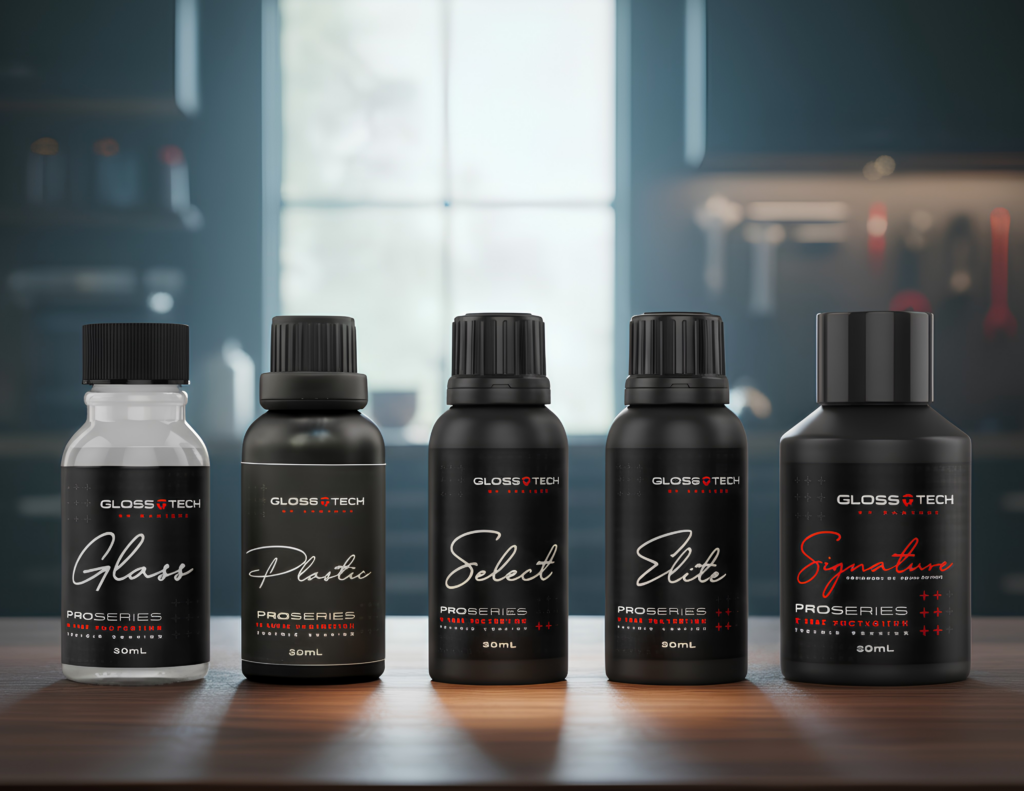
On the coating side we are an authorised GlossTech ProSeries installer, with three automotive tiers plus specialty coatings for wheels, brake calipers, glass, and for PPF and vinyl surfaces. Full details and tier pricing are on the automotive ceramic page.

Worth saying plainly: in a PPF vs ceramic coating decision, installer skill matters more than brand on both sides. A premium coating applied over poorly prepped paint locks in the defects. Premium film installed carelessly lifts at the edges. Our guide on choosing a PPF installer covers what to ask any shop.

Common Questions

Can a ceramic coating stop rock chips?

No. A coating is measured in micrometres and adds no meaningful physical thickness. It resists chemical etching, staining, and contamination, and it makes washing easier, but it cannot absorb impact. Only paint protection film does that.

Can I put a ceramic coating on top of PPF?

Yes, and for many owners it is the ideal setup. We use a coating formulated for film and vinyl surfaces, since coating over PPF behaves differently from coating bare paint. It adds gloss, improves cleaning, and helps the film stay clear.

Is PPF worth it if I already have a ceramic coating?

Yes. A coating protects against contamination and makes washing easier, but it does not stop impact damage. Paint protection film can still be installed over previously coated paint after proper preparation, giving you physical protection where it is actually needed. The prep step matters: the coating has to be corrected back so the film bonds properly.

Which should I do first if I can only afford one?

It depends on how you drive. Highway kilometres mean film first, on the front end, because chips are the damage you cannot undo. A garage-kept low-kilometre car gets more real value from a coating.

How long does each one last?

Premium PPF carries a 10-year manufacturer warranty and typically performs 7 to 10 years or more. Our automotive ceramic tiers run 2 years at Select, 4 at Elite, and 6 at Signature. Both depend on care, storage, and sun exposure.

Is ceramic coating just an expensive wax?

No. Wax sits on the surface and lasts weeks to months. A ceramic coating chemically bonds and cures into a hard layer measured in years. The chemistry and the durability are genuinely different.

Does either damage my paint on removal?

Premium film installed on healthy factory paint and removed by an experienced installer comes off cleanly. Ceramic coatings wear down gradually rather than being peeled off, and are removed by polishing when the time comes.

Still not sure which one you need?

Tell us how you drive, where the car is parked, and how long you plan to keep it. We will tell you honestly whether you need film, a coating, both, or neither. Sometimes the answer is neither, and we will say so.